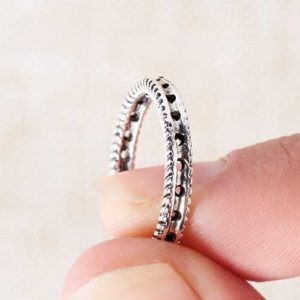
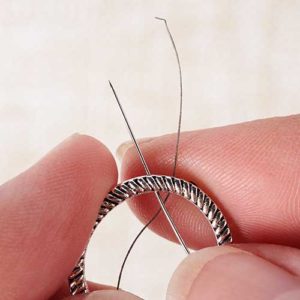
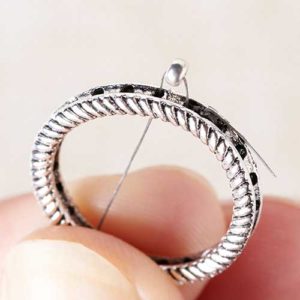
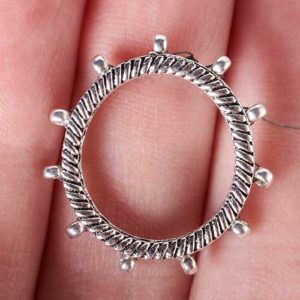
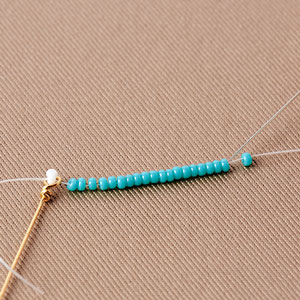
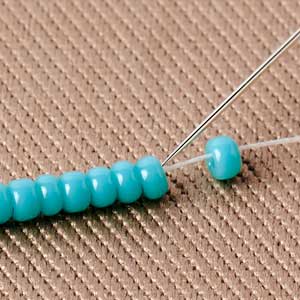
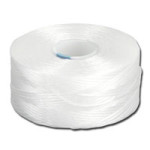
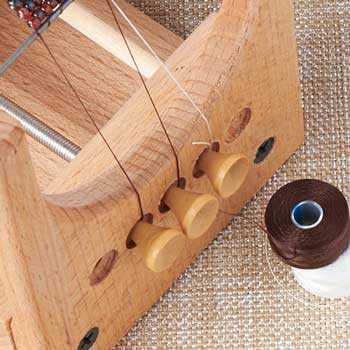
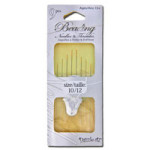
Add to your jewelry tools with the BeadSmith Spin & String, Bead Stringing Tool. Stringing on seed beads will get easier with this essential tool. Watch an information tutorial video on how to set up and use the bead stringing tool below.
Czech Honeycomb Jewel Beads with Bracelet Tutorials
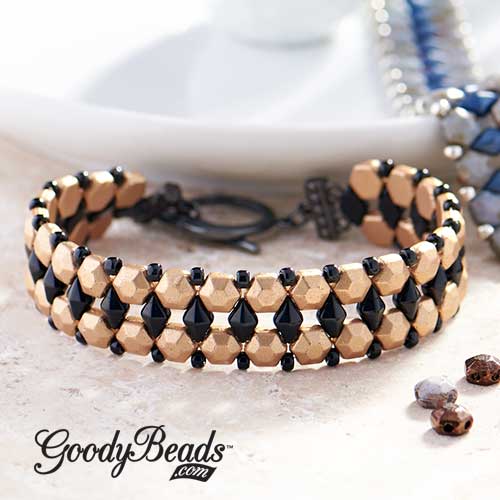
With the popularity of the Czech Honeycomb two-hole bead, comes the Honeycomb Jewel bead. Here are two projects where we used these beads to make a bead-stitched bracelet with DiamonDuos and as a wire cuff bracelet with bead wire.
What makes Czech Honeycomb Jewel beads different than other honeycomb beads? Honeycomb jewel beads are faceted on one side, to give depth and dimension, and flat on the other.
Honeycomb Jewel and DiamonDuo Bracelet with Tutorial
Designed by So Vang
We paired the Honeycomb Jewel shape with DiamonDuos, which plays off each others’ faceted look. We took the Chalk Lazure Jewel (Z018620) and gave this bracelet a pop with a bold hue of the Pastel Montana Blue DiamonDuo (SB03347).
Designed by our own Heidi Urlaub, this gorgeous necklace was featured in our 2015 December seed bead fringe trend. We love her edgy designs. See her wear another similar style and learn how to make the simple loops needed for this piece on our YouTube video: How to Make Simple Loops. This statement necklace is a showstopper and very easy to make!
Falling Waters Necklace
Designed by Heidi Urlaub
With a basic understanding of how to make simple loops and opening and closing jump rings, this necklace is quite easy to make. Made with a combinations of size 8/0 and 11/0 Miyuki seed beads and bugle beads, you can make this necklace in many different colors.
Necklace Tutorial
What you will need to make this:
(2 pk. OR 185) A019697/A0019688– 2 Inch Silver Plated 21 Gauge Headpins with Ball Top
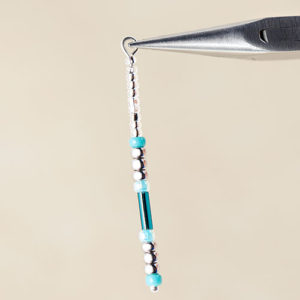
Step One: On a headpin slide on the following beads in the image and make a simple loop. Make a total of 175 headpin dangles.
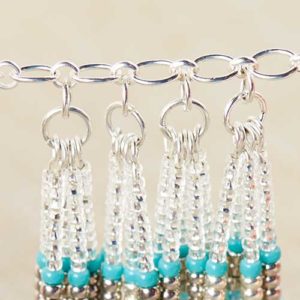
Step two: Open a 6mm jump ring and slide on 5 headpin dangles. Close jump ring. Repeat to make a total of 35.
Step Three: Attach the 6mm jump ring with headpin dangles (made in step two) to an open 5mm jump ring, then attach this 5mm jump ring to the smaller links of your 18″ chain. Close the 5mm jump ring. Repeat 35 times. TIP: To center the look, start from the middle and work your way outwards on either side simultaneously.
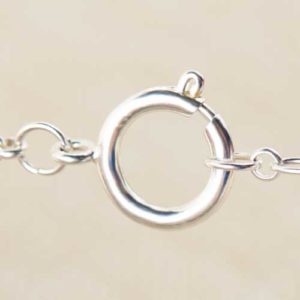
Step Four: Open a 6mm jump ring, slide one end of your chain link and close jump ring. Open another jump ring and slide on loop of your clasp, through other chain link end and close jump ring.
Step Five: Your necklace is complete!
New Year’s Statement Necklaces
Glam up your New Year’s Eve party with your favorite dress, dancing shoes and statement necklace. We have a few fashion trend necklaces sure to turn heads before the ball drops!
Tease your fun side with a statement necklace donned with Jesse James beads from our Dec ’16 trend. Create this statement necklace with the Cabin by the Lake Mix, chain, bib connectorsand feather charms. Finish it up with leather cord and you can get on with the partying!
Designed by So Vang
Check out this waterfall necklace from our June ‘16 Birthstone Trend. This statement necklace has Swarovski® pearls linked together by wire wrapping each dangle and attaching each dangle to the gold-plated necklace with jump rings.
From our July ’16 Birthstone Trend, this statement necklace has the perfect hues for the festive holidays. Headpins are strung with Czech fire polish beads, through Textured Large Oval Links (CH00738/CH00739) and teardrop Chinese crystals.
Designed by So Vang
Let these Dakota Stone Gemstone Pendants (Nov ’16 Trend) create the ultimate focal statement necklace. Simply string one of these pendants with small round beads to separate the stunning sets and add your favorite chain to complete a necklace you can wear year ‘round!
From BeadSmith® comes a new wave of SuperDuos beads: Duets. SuperDuo Duets features a two-toned color that shimmers, and different hues on each side of the bead. These unique beads are perfect for defining lines and beading accent color around borders.
BeadSmith has an inspiring video featuring these new SuperDuo Duets.
Color Shifting Bracelet from BeadSmith w/ Tutorial
We love the simplicity of this bracelet pattern from BeadSmith. We used the Black/Red Luster SuperDuo Duets (SB03501) with Orange Luster on Chalk SuperDuo (SB02110).
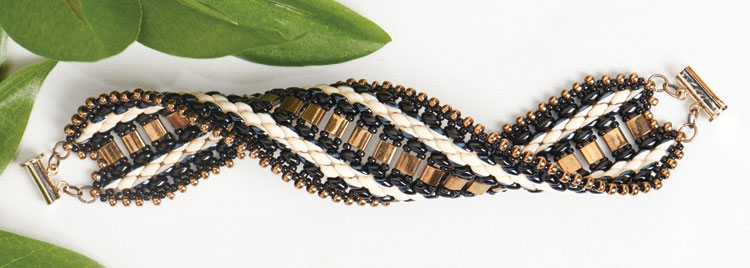
Here, we took the same pattern from the Color Shifting Bracelet and redesigned it by substituting the middle SuperDuos with a size 11/0 Miyuki seed bead, a Miyuki Tila and another size 11/0 Miyuki seed bead. We used Black/White Beige Luster SuperDuo Duet (SB03491) and layered the black sides of the duet together on the edges for an interesting stripe effect.
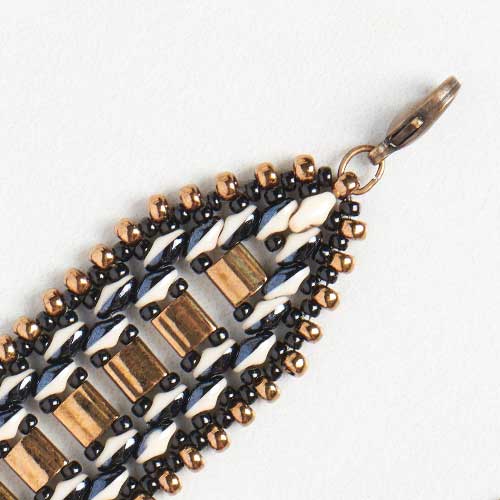
We also used 8/0 Miyuki Dark Bronze seed bead for the outer edges instead of alternating between a size 11/0 and 8/0 seed bead. Plus, check out the image below on how we’ve sewn our ends. We had sewn in a size 8/0 seed beads at the end to loop in a jump ring and lobster clasp on one end and chain link on the other.
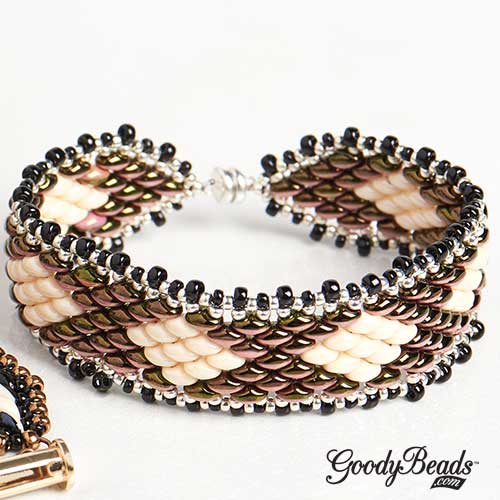
We amped up the pattern and adding more rows of SuperDuos and SuperDuo Duets to the previous bracelet. This bracelet pattern will create a band width just under 1.5” with a cream and black stripe effect and bronze border.
Czech Honeycomb Pendant with Groovy Bead Frame – FREE Tutorial
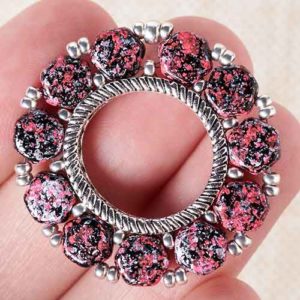
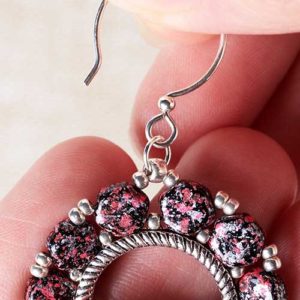
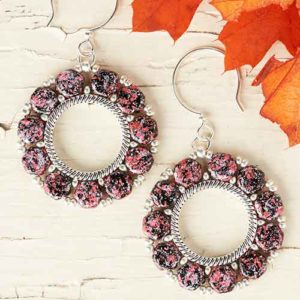
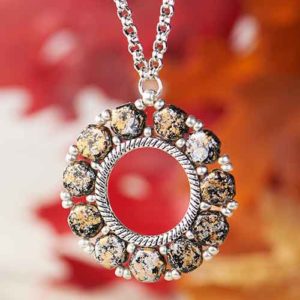
Here’s a unique way to use popular Czech Honeycomb beads. We have sewn them into a stunning pattern using a Groovy Bead Frame. Groovy Bead Frames are designed to string and decorate from different angles. This easy tutorial will create the perfect focal pendant on a necklace or dangled on a pair of earrings.
Honeycomb Necklace and Earrings
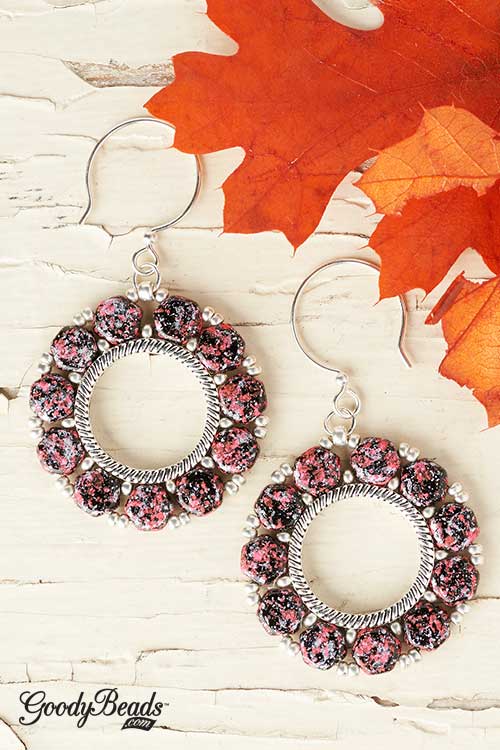
New to GoodyBeads are Tweedy Honeycomb beads that have a two-tone, splattered color finish.
Mia Mosaic Honeycomb Necklace – Golden
Designed by So Vang
Mia Mosaic Honeycomb Earrings – Fuchsia
Designed by So Vang
Czech Honeycomb Pendant with Groovy Bead Frame Tutorial
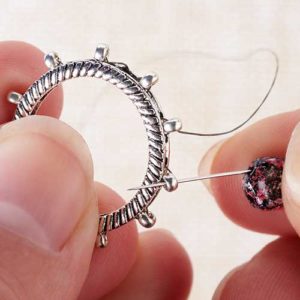
Step 1: Gather your materials. You will find that the Groovy Bead Frame is designed with 22 holes.
Step 2: Add 5’ of beading thread to your needle. Sew down one hole of the ring and up through the hole next to the first. Make a knot with the strands to anchor your thread.
Step 3: Sew up and down through the two holes to secure thread. Sew up and out of the ring. Pick up a size 11/0 seed bead and sew down through the next hole.
Step 4: Sew up through the hole, pick up a size 11/0 seed bead and down the next hole. Repeat until you’ve finished your way around the frame. You would have added 11 seed beads.
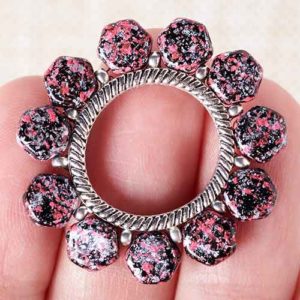
Step 5: Sew up and out one of the holes and through a seed bead. Pick up a honeycomb bead and sew through next seed bead.
Step 6: Repeat by adding a Honeycomb between each seed bead. You will have added 11 honeycomb beads. Tie an overhand knot to secure and tighten your beaded layers.
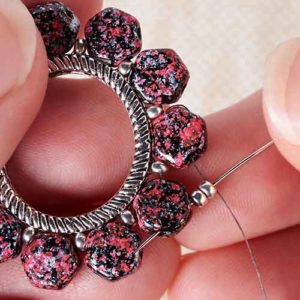
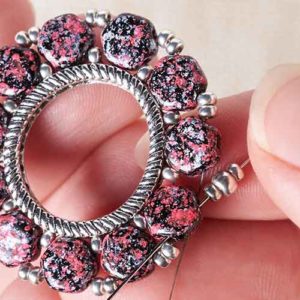
Step 7: Sew through a honeycomb bead and loop up to the outer hole of the honeycomb bead. Pick up two size 11/0 seed bead and sew through next honeycomb bead. Repeat nine more times. Make sure to keep your threads tight.
Step 8: In the last section, you will pick up one 11/0, one 8/0 and one 11/0 seed bead. Sew through last honeycomb bead.
Step 9: Tie off your thread ends and sew through a few beads before cutting excess thread.
Step 10: Open a size 4mm jump ring and slide through the size 8/0 seed bead and the loop of your ear wire. Close jump ring.
Step 11: Repeat all steps for other earring.
Step 12: For a necklace pendant; at step 10, slide the two ends off a 30” piece of chain link through jump ring. Close jump ring for a complete Czech Honeycomb ring pendant necklace.
(1) TCZ0096 – Sterling Silver Hoop Earring Wires with Loop by Tierracast®
Artistic Wire® Finding Forms – Beaded Holiday Ornament Charms
Make some fun beaded holiday ornament charms with Artistic Wire® Finding Forms. Watch Artistic Wire demonstrate how to create a star, snowman or tree. Hang one from a holiday tree, dangle one from a window or attach one to a neatly wrapped present! Get your finding forms, artistic wire, and seed beads today at GoodyBeads to make some beaded holiday ornaments of your own!
What you will need to create a finding form ornament charm:
Here we created a holiday tree (TL00250) with 22 Gauge Antique Brass Wire (AW00026) and included a Swarovski® star bead to the top. We took 26 Gauge Artistic Wire and wrapped back and forth on the inside of the tree while adding random seed beads. This project is perfect if you have leftover seed beads from previous projects. You can also use our Miyuki Seed Bead Grab Bag (A011619) for a nice variation of color and sizes.
Holiday Star Ornament Charm
Designed By Tory Vezina
Our star (TL00251) is made with Antique Brass Wire (AW00026) with bronze, white, clear and cream hued seed beads crisscrossed in the middle on 26 gauge wire.
Holiday Snowman Ornament Charm
Designed By Tory Vezina
We thinkthis snowman (TL00253) is just darling! We added an 8mm squaredelle (A011435) and 6mm Swarovski cube (SW00309) to depict a top hat for our snowman. We ran some 26 Gauge artistic wire side to side, and layered with seed beads and Czech melon beads for the scarf.
Czech SuperDuo Star Blooms Necklace and Earrings with FREE Tutorial
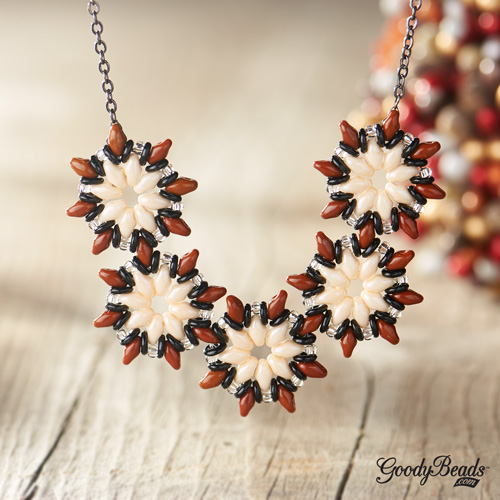
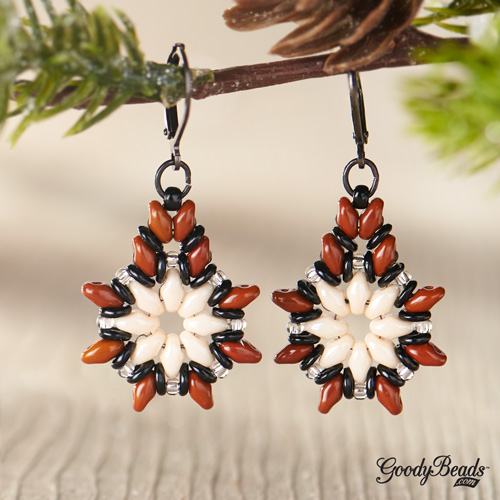
We have the perfect holiday jewelry set for the fun and stylish fashionista.. Try this free tutorial on how to make these star blooms necklace and earrings using SuperDuos, o-beads and size 10/0 round czech beads. Make it just in time for the holidays!
SuperDuo Star Blooms Poinsettia Necklace and Earrings
Designed by So Vang
Designed by So Vang
Tutorial and Components
Created by our in-house designer So Vang, you can make this holiday theme, star blooms necklace and earrings set with this FREE illustrated tutorial.
Necklace Extra Tip
When you have finished stringing together your five components, we have two options on how to attach your 24” chain.
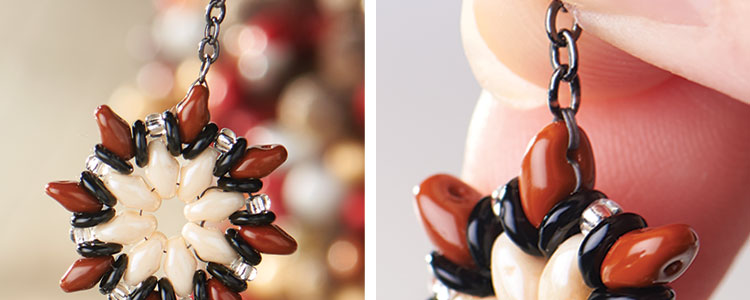
First, you can sew the chain at the end of the SuperDuo as shown in our photo below. Refer to the illustrated tutorial or image to see that you connect the chain end to the SuperDuo across from the connected SuperDuo of your side poinsettia component.
Or, secondly you can use a small gauge jump ring to slide through theSuperDuo like how we’ve shown here. However, not all SuperDuo holes are large enough for the jump ring to slide through. If it does not, going with the first option will be best to adding your chain.
SuperDuo Southwestern Star Bloom Style
Designed by So Vang
Don’t think you are limited to just a holiday-hued necklace. Try out different combinations of colors and make it your own. We’ve used turquoise and deep coral to create ours above.
How to Use Silk Cord in Jewelry Making
Silk cord has been used as a stringing material in jewelry-making for centuries. No other beading cord offers the softness that natural silk provides. Jewelry designs made with 100% silk bead cord drape beautifully and the cord itself can become a feature with knotting techniques. Whether you’re looking to create a simple strand of beads or incorporate knotted bead clusters into your designs, GoodyBeads.com is here to show you how easy and versatile this timeless stringing material can be.
One of our favorite silk bead cord brands is Griffin. Griffin bead cords are made of 100% natural silk and come in a rainbow of colors and a variety of thread sizes.
Griffin bead cords are sold 2-meters per card. Two strands of twisted silk are wrapped around a cardboard backer. Each cord comes with its own needle for easy threading.
Choosing Silk Cord
Thread thickness is very important, especially if you plan on incorporating knots into your designs. Beads can slide over a knot if the cord is too thin for the bead hole you are working with. Griffin bead cords has its own numeric system for categorizing thread cord sizes: No. 0 – No. 12.
Each thread number has an associated millimeter size. Below is a quick reference guide for each number:
No. 0 = 0.30mm
No. 2 = 0.45mm
No. 4 = 0.60mm
No. 6 = 0.70mm
No. 8 = 0.80mm
No. 12 = 0.98mm
Smooth Out Silk Cord
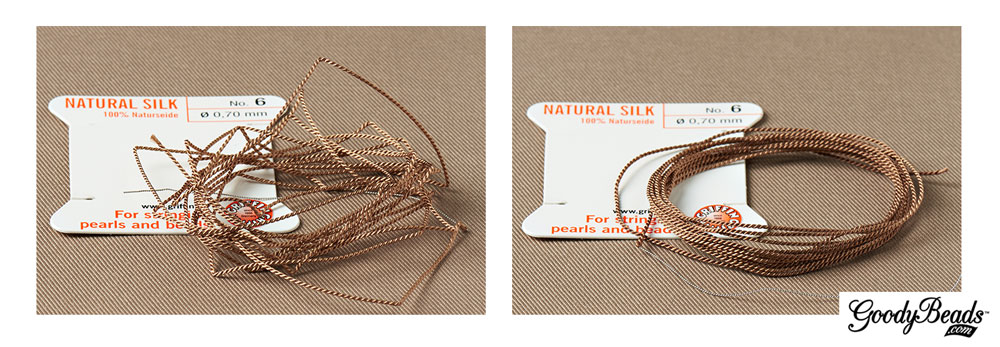
Since silk bead cords come spooled on a card, you must prepare your new cord for use by smoothing out the kinks first.
To smooth out your cord, unravel the whole cord from the card. Starting from one end, dip your fingers in water and run your damp fingers through a section of the cord. Run your fingers over the section a few times to help straighten them out. Once that section is straight, continue on down to the next section of the cord with damp fingers until you’ve straightened the whole piece. Next, run a paper towel over the entire cord and gently squeeze to remove any residual water from the cord. That’s all you need to do. The cord will still be a bit damp but you can certainly use it right away. You can also wait a few minutes until it’s fully dried.
NOTE: You can use the same cord for multiple projects if you plan to keep using the needle that is attached to the cord. String bead(s) through the needle and utilize the end section of the cord.
Using Clamshell Bead Tip with Silk Cord
A way to attach your silk cord to jump rings or clasps is to attach clamshell bead tips.
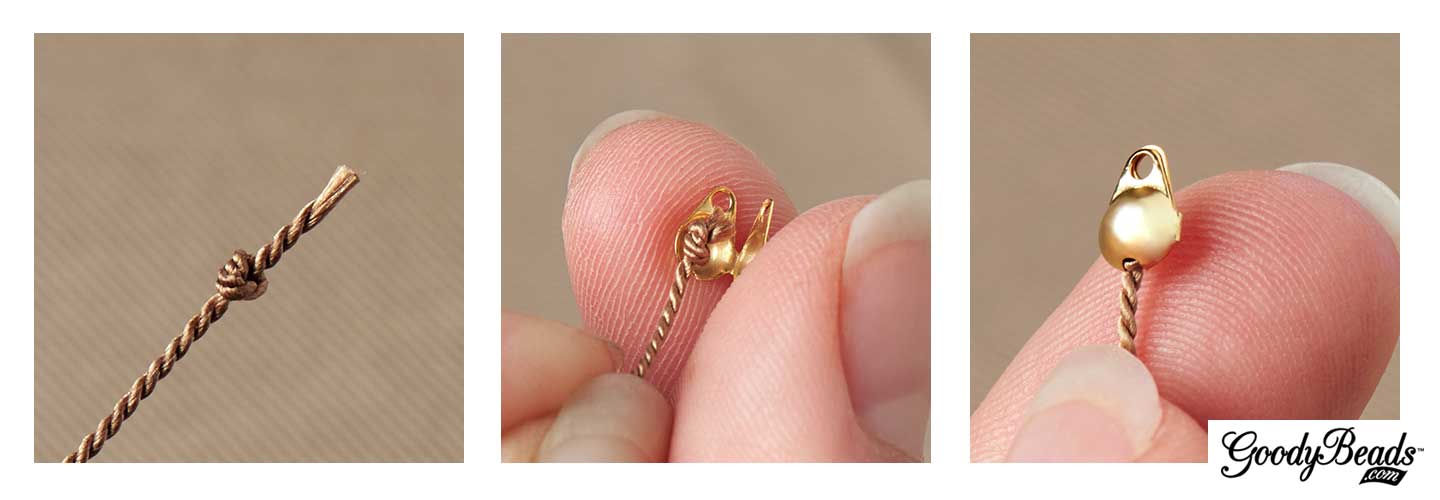
Start by making a knot at the end of your prepared silk cord. Cut any excess cord close to the knot. Add a dab of Super New Glue or fast-drying glue to the knot. Place the knot inside the clamshell center and fold the clamshell over the knot. The glue will keep the knot from unraveling and to adhere the silk cord to the inside of the clamshell bead tip. Once the glue is dry, it’s ready to use.
Need a little inspiration? Here are some ways we used Griffin silk bead cord in our jewelry designs. Plus, quick tips on how you can create these designs yourself!
Crystal Cluster Knotted Silk Cord Necklace
Designed by So Vang
Make a necklace with knotting in-between clusters of beads. Choose from Swarovski® crystals, Chinese crystals, seed beads or your favorite gemstones. For our necklace, we used the entire 2-meter cord and strung on clusters of one gold seed bead, three dainty round Chinese crystals and one gold seed bead, that were knotted with an inch gap between clusters. This version makes a 60” necklace that you can wrap around two or three times.
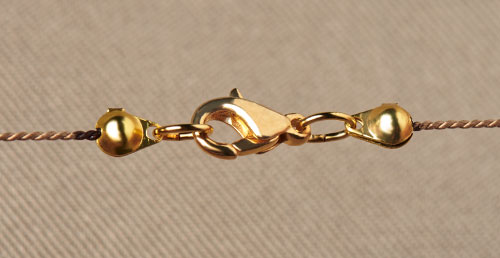
Here you can see how the clamshell bead tips are used in conjunction with jump rings and a lobster clasp.
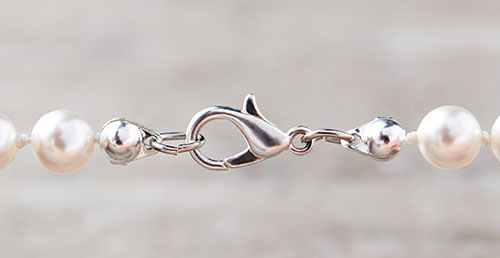
Pearl beads and silk cord are a match made in heaven. Not only do they look great together, the silk cord also helps prolong the life of your pearl jewelry by preventing the beads from rubbing up against each other, which can breakdown the bead’s finish. Making this elegant necklace is super easy.
First, make a knot and clamp a clamshell over the knot. Make another knot close to the clamshell. String on a pearl. Make a knot close to that pearl. Repeat until a preferred length. Make two knots at the end and clamp a clamshell over the last knot. Finish with a lobster clasp and you’re done!
If you have a worn-out pearl necklace, you can undo all the pearls and restring on silk cord to extend its jewelry life.
Minimalist jewelry is a huge fashion trend right now. Dainty jewelry components shine alone or together in multiple strands like our layered silk cord necklace. For this necklace, we focused on the sleek simplicity of gold tube beads and the lightness of silk cord.
Step 1: String on 25 gold tube beads on white silk cord. With the beads strung on, cut 20” off the end of the silk cord. Make 2.
Step 2: String on 25 gold tube beads on white silk cord. With the beads strung on, cut 22” off the end of the silk cord. Make 2.
Step 3: Gather the four cord strands and make a knot. Repeat to the other end.
Step 4: Dab some Super New Glue to both knots. Clamp a clamshell over the knots.
Step 5: Add a jump ring to one of the clamshell tip ends.
Step 6: Add a jump ring and a lobster clasp to the other clamshell tip ends. Done.
This style of necklace is perfect for small dainty beads or seed beads or even some NEW 3mm or 2mm Czech round beads.
For this bracelet, we twisted groups of silk cord with size 11/0 Miyuki seed beads and gold plated chain.
Step 1: String on seed bead to 8” and cut 10” silk cord strands with seed bead on. Make twelve strands. Tip: You can use the Bead Spinner to help to string on seed beads.
Step 2: Gather three seed bead strands and knot all three strands at both ends as close as you can to the seed beads. Clamp a clamshell over the knots. Make four group of seed bead strands.
Step 3: Cut two chain links at 8” and attach oval jump rings to each end of the chains.
Step 4: Also cut a few links of chain for your bracelet chain extender.
Step 5: Open an oval jump ring and slide on your lobster clasp.
Step 6: Open a larger jump ring and slide on these:
chain extender piece, two seed bead groups, chain extender piece, two seed bead groups.
Step 7: Close Jump ring.
Step 8: Leaving the chain extender along, separate the strands into two sections of chain and two seed bead grouped strands. Make a “flemish twist” with the two sections.
Step 9: Open a large jump ring and slide on the other ends of the chain and grouped seed beads and lobster clasp jump ring.
Step 9: Close jump ring and you are done.
(Close-up shot of jump ring with grouped seed beads and chain links.)
We hope enjoyed these tips and tutorials. Check our next blog post where we show you how to create evenly spaced knots in your jewelry designs using The EasyKnotter® tool. Happy Beading!
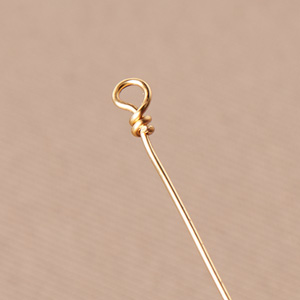
Step One: Cut 22-gauge wire and make a wire wrapped loop. Make sure to make a loop small enough so seed beads can not pass through.
Step Two: Knot a bead to the end of the thread. Feed the thread through wire loop.
Step Three: String on your preferred amount of seed beads. (Here we are using size 11 Miyuki seed beads.)
Step Four: Skip the last bead and thread the needle back though the beads.
Step Five: Thread through the wire loop.
Step Six: String on beads and thread back through the beads while skipping the last bead. Then go back through the wire loop.
Step Seven: Repeat until you’ve reached a desired thickness. This thickness is according to how full you want your tassel to look within the bead cap or end that is being used. Tie off the ends and cut excess. You can add fast-drying glue to secure the knots.
Step Eight: Add your bead cap or bead end and make a wire wrapped loop. You’ve completed your beaded tassel.
Guinevere Beaded Tassel Lariat Necklace
Designed by Tory Vezina
If Queen Guinevere wore a tassel necklace, this would be the necklace. With pearl seed beads and spiral rope chain, this necklace is perfect for common folk to feel like a queen!
The tassel was made with size 11 pearl seed beads and gold end caps. Make two beaded tassels. Cut some rope chain at 3-4 feet and attach each end with a brass jump ring and beaded tassel. Wear this lariat necklace loose while wrapped around once or twice. Or tie a knot 2-4 inches away from your beaded tassel.
Czech Crescent Bracelet and Earrings with FREE Illustrated Tutorial
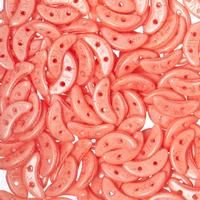
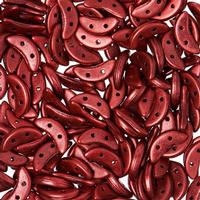
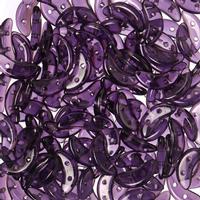
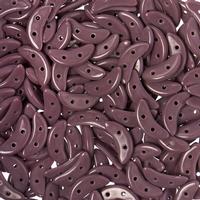
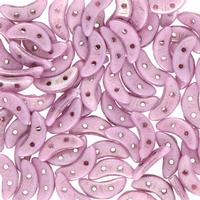
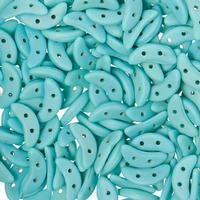
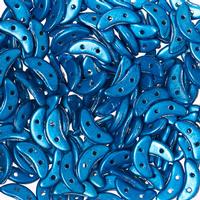
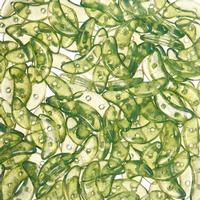
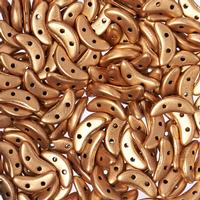
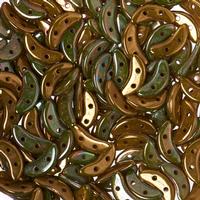
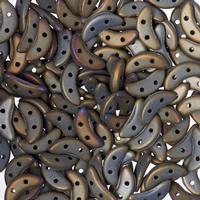
Czech Crescent beads are NEW at GoodyBeads. The Czech crescent beads are wedge-shaped beads with two holes. We have two easy and free tutorials using these Czech crescent beads.
Midnight Gold Czech Crescent Bracelet
Design by So Vang
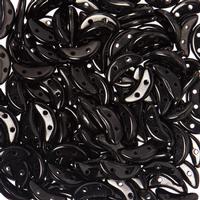
For this bracelet, we used a combination of black and gold crescent beads with Swarovski® crystals in Graphite AB2X. The midnight glow of the AB2X is hauntingly beautiful in this piece.
We love this bracelet because it is simple to make. First, start by threading on 4 seed beads. Keep the ends of your thread untied. Then, you will thread on a top layer with a sequence of 3 Czech crescent, a seed bead and a 4mm bicone crystal. Repeat this sequence until you’ve reached your preferred bracelet length. End this top layer with 3 crescent beads and 4 seed beads. Now, bring the thread down to the bottom 3 crescent beads you’ve ended with. You will now be threading the bottom layer by adding a seed bead and bicone crystal in between each crescent bead grouping until you’ve reached the end. Tie both of your thread ends together. Feed your threads back through a few beads before you cut off excess thread. Add your clasp and chain link to the seed bead loop ends you’ve made with jump rings.
First thread on your top layer with, crescent bead, seed bead, bicone crystal (4 times). Tie both thread ends together to create a cylinder shape. Feed your thread through one crescent bead and loop down through the second hole of the crescent bead. Thread in reverse of your cylinder shape with adding a seed bead and bicone crystal inbetween the crescent bead. Once you’ve reached the end. Tie off thread ends and thread through a few beads before cutting off excess and you’ve completed your crescent bead design.
Slide these beads onto the headpin and make a simple loop:
Seed bead, bicone crystal, 8mm round crystal, 6mm round crystal, crescent bead design, bicone crystal and seed bead.
Open your Ear-wire loop and slide on your crescent bead design headpin loop. Repeat for other earring.
How to Use Ricks Bead Loom, PLUS Two Ways to Clasp Loom Bracelets
From traditional Native American Indian-loomed wampum belts to popular and modern Julie Rofman wrap bracelets, bead looming has transcended through changes in time, culture and fashion. A bead loom can help you make elaborate, beautiful necklaces to simplistic bracelets.
If you are new to using the bead loom or have been wanting to use a bead loom, believe us when we say that using the Ricks Bead Loom is super easy and simple. Here are some tips and tricks to using Ricks Bead Loom, as well as some inspirational loom bracelets to get you started. We also provide two different ways to clasp loom bracelets.
Ricks Bead Loom
When you purchase a Ricks Bead Loom, you receive the bead loom and its components, as well as a detailed, visual instructions of how to set up and use the bead loom. You can also check out Ricks video tutorial on his webpage on how to use his bead loom.
The basic method of bead looming is weaving a thread back and forth through rows of seed beads that are sandwiched in between vertical strands or “warp strands”. The difference between a traditional bead loom and Ricks Bead Loom is the amount of warp strands you are using. A traditional loom will have multiple warp strands going up and down along the loom, while a Ricks Bead Loom will have only one strand that wraps back and forth, up and around between the two rods. This continuous wrapping of the strands between rods will leave you with two threads at the end.
Like the instructions you will receive, first you insert your metals rods. These rods are where your vertical warp strands will lay. Adjust the wood piece/tailstock to your preferred bracelet length and start making your warp strands. The amount of warps you have is according to the amount of beads you have in a row, PLUS ONE. If you see the image below, you will see that we have eight seed beads per row and thus we need nine warp strands.
Next, lay your card separator in between the warp strands. It is optional to use the card separator. You can use the warp separator card that comes with the kit. Here, we cut a ½ inch piece of cardstock paper to get us started.
Hook your thread end to your peg and insert it into one of the holes in the front.
You are ready to start your rows. The basic motion of weaving each row is by weaving behind the warp strands with your beads and string. You will then weave back into the same row of beads, but when you feed your needle through, you are gracing the top side of the warp strands.
TIP: When bringing your needle back, use the backside of your needle. Using the backside of the needle will give you a smoother glide through the beads. Be careful not to prick yourself with the sharp end when using this method. Makes you wish you had a thimble on hand, huh? I did.
The first two rows will be tricky but after that you get those two on, it will be easier.
After your two rows are done, slide off the separator and pull your two rows down so it is flushed against the metal rod. Twist the peg that attaches to your thread to keep loose thread tight.
And you are ready to continue with your rows until you’ve reached the end.
TIP: When bringing your needle back through the row of beads, press up on the beads so that they protrude upward. Then, when you sew back through the beads, you will go over the vertical warp strands.
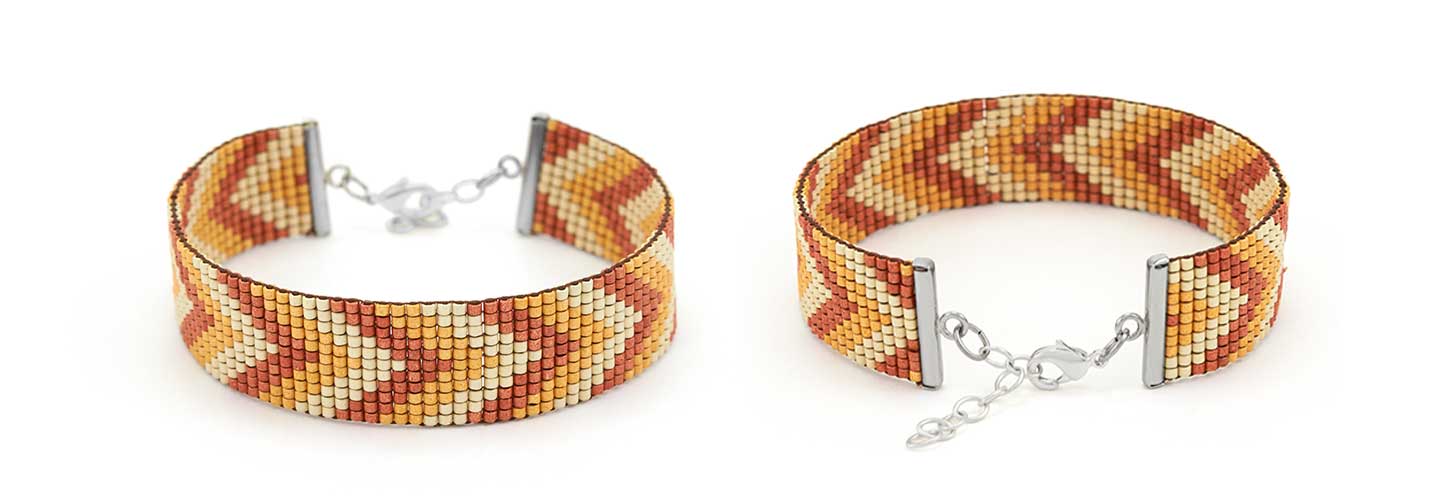
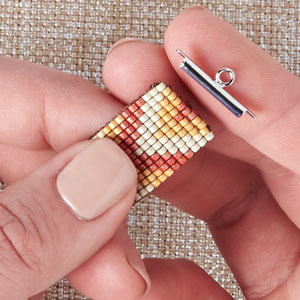
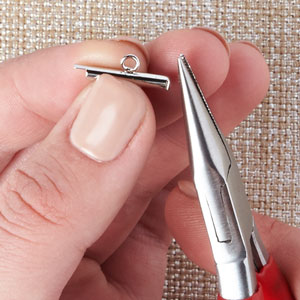
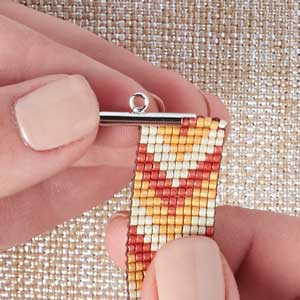
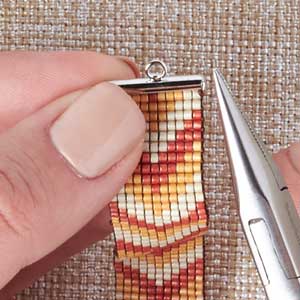
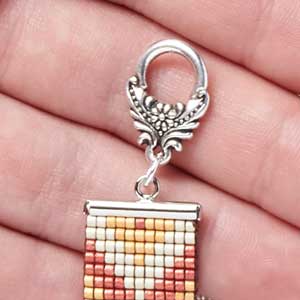
When you have finished your piece, unhook your threads from the pegs and sew the end threads through the rows and knot them. Cut excess thread. Slide your loomed piece off the metal bars and spread out your bead rows evenly outwards towards the ends to hide the loops of the warp strands. Then you are ready to add your clasp ends. Here are two types of loomed bracelets with instructions for adding a Miyuki Tube Finding and sewing on a bead loop to add your clasp.
For this bracelet, we used Miyuki Tube Findings, which are used particularly with Miyuki Delica Size 11 seed beads. GoodyBeads has four available sizes at 15mm, 20mm, 35mm, and 60mm, which will accommodate a certain amount of seed bead per row.
You can make a design like our Delica seed bead bracelet or you can use a Miyuki seed bead mix like our bracelet here. For our clasp for this bracelet, we made a loop using seed beads.
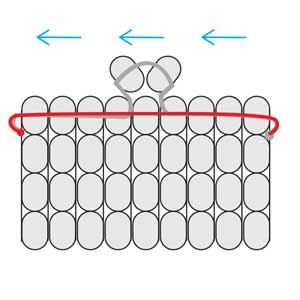
Step 1: Tie your thread end and insert your needle halfway through your row of beads.
Step 2: Add two seed beads. Skip one seed bead in your row and insert needle through the rest of your row. Make a knot.
3. After you make a knot, go back through the seed beads you threaded through. Make a knot on the other end.
Step 4: Then, feed your needle and run through your entire bead row and make a knot. Cut excess thread.
Step 5: Your end result.
Step 6: Insert jump ring in the loop you’ve made and add your choice of clasp. You are finished.
Make a Multi-Strand Necklace with Swarovski® Tahitian Pearls
by Kristal Wick
One of the easiest “go-to” designs I have found is a multi-strand necklace or bracelet. WHAT? You say these look soooooooo difficult? Not true! Once you master the multi-strand, you’ll be hooked! I like to start by making piles of my fave components; for example, sitting in my studio on a chilly (16 degrees below zero) January day in Minnesota, I CRAVED a splash of beach so I grabbed some TierraCast® dolphins and seashells, beautiful blue Swarovski Tahitian pearls and crystals and frosted seed beads to give the piece a sea glass effect. Use three different colors of beading wire with one exposed to add an additional dimension to the necklace. It’s trendy these days to mix metals so I threw in copper components to reflect the shades of glistening sand and a bit of silver to represent the crest of the waves breaking up on shore. Whether you’re physically on a beach or visiting one in your mind, I hope this seashore delight will help you get through this long winter! Use three colors of beading wire – one color exposed – to add an additional dimension to the necklace.
Cut five 16 inch pieces of beading wire (various colors).
Crimp one end of the wire leaving a small loop.
String the following onto strand #1:
Three Lined Light Seafoam AB Miyuki Seed Beads
Seven Matte Transparent Silver Lined Crystal Long Drop Miyuki Seed Beads
Antique Silver Diamond Bead Frame
Indicolite Round Mini Bead
Series: 20 Matte Transparent Silver Lined Crystal Long Drop Miyuki Seed Beads
Antique Silver Diamond Bead Frame
Indicolite Round Mini Bead
Repeat the series four more times and add the following:
Seven Matte Transparent Silver Lined Crystal Long Drop Miyuki Seed Beads
Three Lined Light Seafoam AB Miyuki Seed Beads
Crimp beading wire end leaving a small loop.
Add Copper Oval Jump Rings to the four dolphin charms
Crimp one end of the wire leaving a small loop and string the following onto strand #2:
Slide the following series onto the beading wire:
Series: Crimp tube
3mm Antique Silver Beaded Heishi Spacer
4mm Antique Silver Beaded Heishi Spacer
12mm Tahitian Swarovski Pearl
4mm Antique Silver Beaded Heishi Spacer
3mm Antique Silver Beaded Heishi Spacer
Crimp tube
Lay this strand down next to Strand # 1 and space the pearl series in the center of the first 20 Matte Transparent Silver Lined Crystal Long Drop Miyuki Seed Bead series and crimp on either side of the pearl series.
Gently squeeze the crimp covers over the crimps.
Add the series again and crimp about an inch down the beading wire. Repeat steps 8–10 for the remaining three pearl series.
NOTE: Before doing the final crimp on each strand, make sure they all end up the same length. Adjust the number of beads on each strand to ensure this.
Crimp beading wire end leaving a small loop.
Crimp one end of the wire leaving a small loop and string the following onto strand #3:
Three Silver Lined Capri Blue Miyuki Seed Beads
Series: Antique Copper Scalloped Bead Cap
Bicone Crystal Denim Blue AB2X
Antique Copper Scalloped Bead Cap
Silver Lined Capri Blue Miyuki Seed Bead
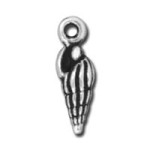
Antique Silver Small Spindle Shell Charm
Silver Lined Capri Blue Miyuki Seed Bead
Antique Copper Scalloped Bead Cap
Bicone Crystal Denim Blue AB2X
Antique Copper Scalloped Bead Cap
Silver Lined Capri Blue Miyuki Seed Bead
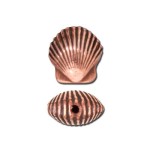
Antique Copper Small Shell Bead
Silver Lined Capri Blue Miyuki Seed Bead
Repeat the series seven more times alternating the Dolphin charms and Spindle Shell charms, then add two Silver Lined Capri Blue Miyuki Seed Beads.
Crimp beading wire end leaving a small loop.
Crimp one end of the wire leaving a small loop and string the following onto strand #4:
Two Matte Transparent Light Blue Miyuki Seed Beads
3mm Crystal Jade Swarovski Pearl
Series: Five Matte Dark Seafoam Delica Duracoat Galvanized Seed Beads
3mm Crystal Jade Swarovski Pearl
Matte Transparent Light Blue Miyuki Seed Bead
3mm Crystal Jade Swarovski Pearl
Five Matte Dark Seafoam Delica Duracoat Galvanized Seed Beads
3mm Crystal Jade Swarovski Pearl
Matte Transparent Light Blue Miyuki Seed Bead
3mm Crystal Jade Swarovski Pearl
Five Matte Dark Seafoam Delica Duracoat Galvanized Seed Beads
4mm Antique Copper Beaded Bead Cap by TierraCast
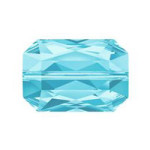
Swarovski® Crystal 14mm Aquamarine Emerald Cut Bead
4mm Antique Copper Beaded Bead Cap by TierraCast
Repeat the series four more times then add the following:
Five Matte Dark Seafoam Delica Duracoat Galvanized Seed Beads
3mm Crystal Jade Swarovski Pearl
Matte Transparent Light Blue Miyuki Seed Bead
3mm Crystal Jade Swarovski Pearl
Five Matte Dark Seafoam Delica Duracoat Galvanized Seed Beads
3mm Crystal Jade Swarovski Pearl
Matte Transparent Light Blue Miyuki Seed Bead
3mm Crystal Jade Swarovski Pearl
Five Matte Dark Seafoam Delica Duracoat Galvanized Seed Beads
3mm Crystal Jade Swarovski Pearl
Two Matte Transparent Light Blue Miyuki Seed Beads
Crimp beading wire end leaving a small loop as in Step #2.
Crimp one end of the wire leaving a small loop and string the following onto strand #5:
Transparent Aqua Miyuki Seed Bead
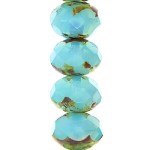
Series: 8mm Baby Blue Czech Faceted Rondelle Glass Bead
Transparent Aqua Miyuki Seed Bead
Sparkle Metallic Gold Lined Crystal Miyuki Seed Bead
Transparent Aqua Miyuki Seed Bead
Sparkle Metallic Gold Lined Crystal Miyuki Seed Bead
Transparent Aqua Miyuki Seed Bead
Repeat this series 17 more times. Add a Transparent Aqua Miyuki Seed Bead and then crimp beading wire end leaving a small loop.
Open eyepin, insert one end loop of all five strands and close the eye pin. Repeat for the other necklace end.
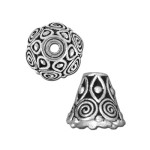
Slide on Antique Silver Spiral Cone Bead Cap, Swarovski® 6mm Indicolite Round Mini Bead, Antique Copper Beaded Bead Cap and make a simple loop on the end. Repeat for the other necklace end.
Add desired chain length (the sample shown uses 2-¼”) to simple loop.
Using a jump ring, add the toggle to the other end of the chain. Repeat steps 20-21 for the other necklace end.
How to Make Leather Wrap Bracelets with Illustrated Tutorial
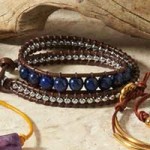
Leather wrap bracelets is a trending favorite to spice up a boho outfit or rock out to a head-banging concert or add to a casual outing with your girlfriends. Wrap bracelets are a must-have for 2016. We will show you how to make wrap bracelets with illustrated tutorial that you can download.
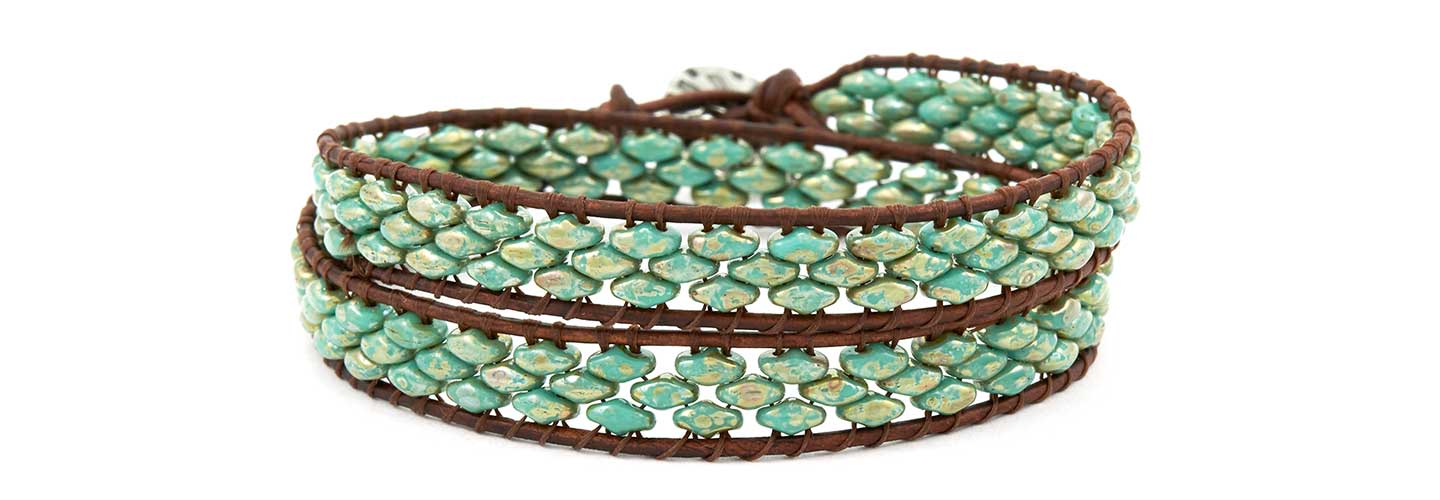
They may look difficult to make, but after a few attempts, they are honestly easy to make. We will show you a tutorial on how to make these bracelets using one-hole beads and super duo beads, as well as a few tips and tricks to help you make these wrap bracelets.
The basic components you need for these bracelets are:
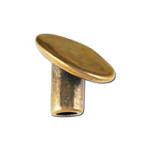
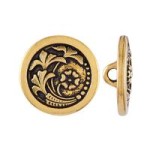
Button findings: which will act as your clasp. Button Ends will work well, also.
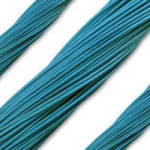
Leather or cotton round cord: these could range from 1mm to 2mm or larger, depending your preference and on the size of beads you are going to use. The length of cord needed for your bracelet will be determined below.
Thread: you can match the thread to your leather cord to hide the look or to add color. Check out some Beading Thread options but keep in mind that you will need a thin enough thread to go through the hole of your beads twice.
Beading Needle: size will be according to your thread and bead’s hole size.
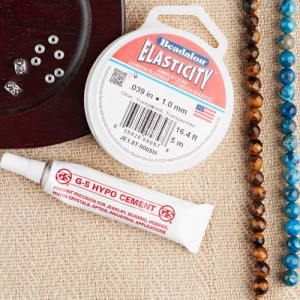
Adhesive: Hypo-Cement with precision tip, is a good choice to glue thread ends or any fast-drying glue will do.
Beads: use your preference of beads or seed beads. Have enough if you plan to have a multi-wrap bracelet.
Determine leather length needed for a wrap bracelet
Use this method to determine the leather cord length you may need for a multi-wrap bracelet.
Take your wrist length and double the length. Multiply that by the number of wraps you want and then add 12”. That will give you an approximate cord length you will need to start your bracelet. (The extra 12” factors in the button knot, end knot(s) and bead size.)
Example:
2 wraps for an 8.5” bracelet: (8.5” x2) x 2 wraps = 34 + 12 = 46” needed.
Or
4 wraps for a 7.5” bracelet: (7.5” x2) x 4 wraps = 60 + 12 = 72” needed.
Keep in mind, these total numbers are approximate. You will want to test the wrap length while you’re making your bracelet. Having extra length is better than being short on your wrapped length goal.
Basic Leather Wrap Bracelet Tutorial
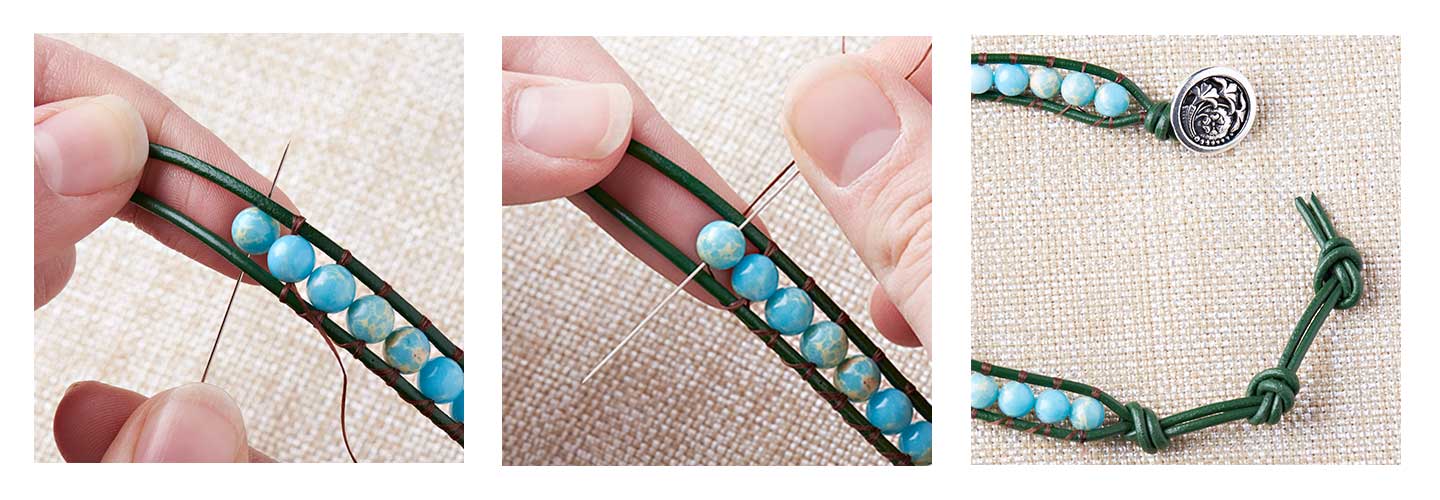
The basic weaving of the thread will be going under the leather cords and then coming over leather cords.
With Czech SuperDuo seed beads, you will be layering the bead holes to create a layer sequence. Below is a tutorial on how to make this SuperDuo wrap around bracelet.
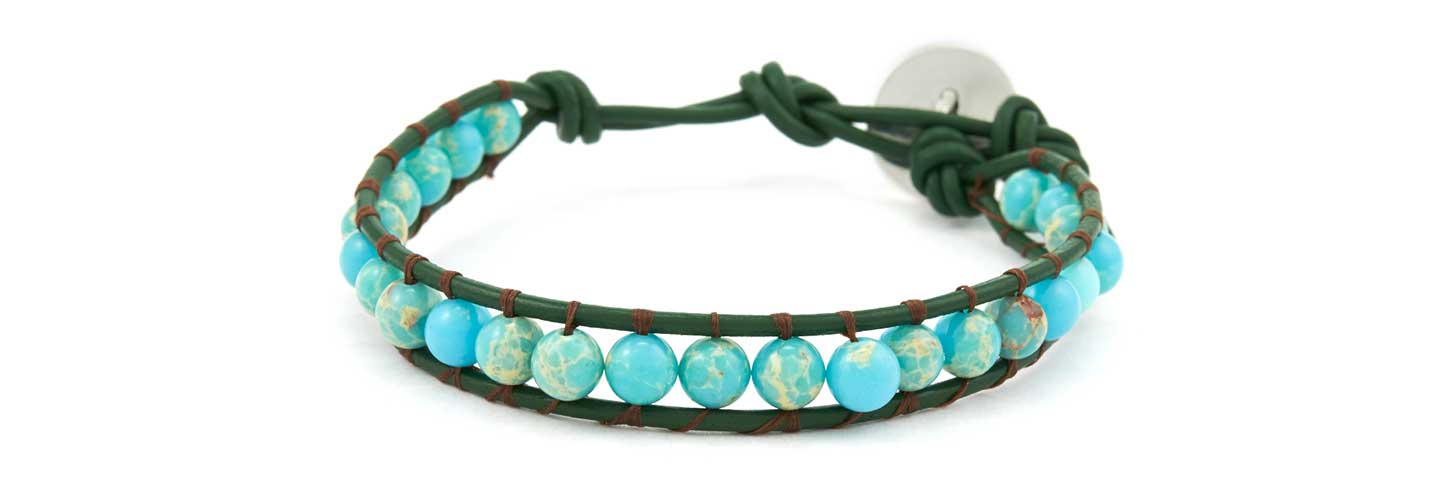
This is a simple one-wrap bracelet. Think about using a different thread color than your leather cord color for a mix of colors.
Use more than one bead on each layer for more embellishment options.
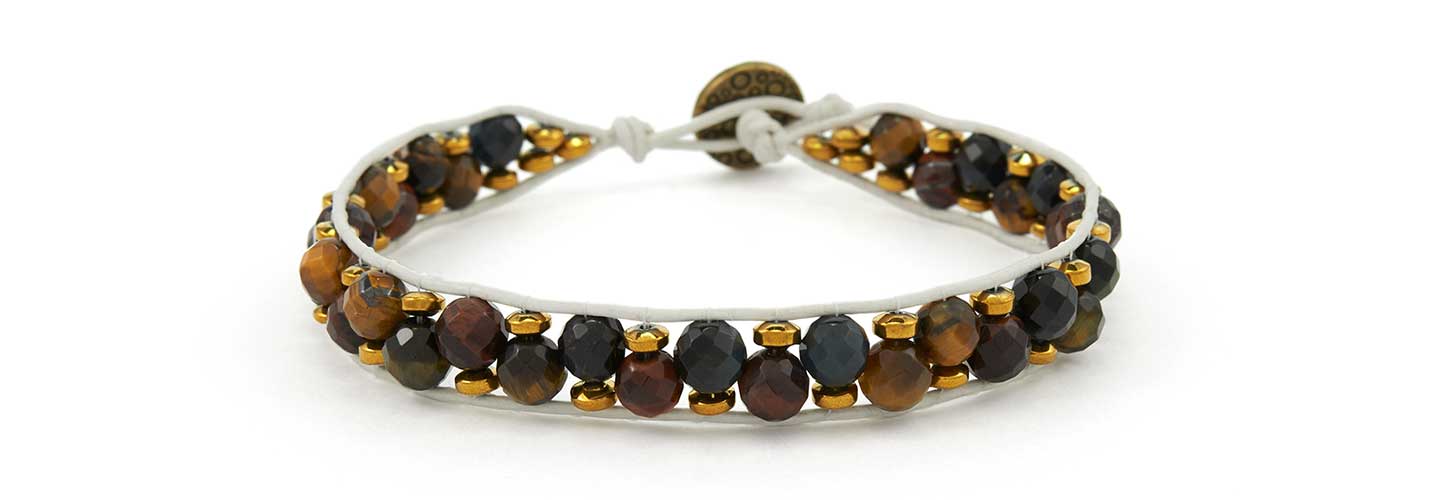
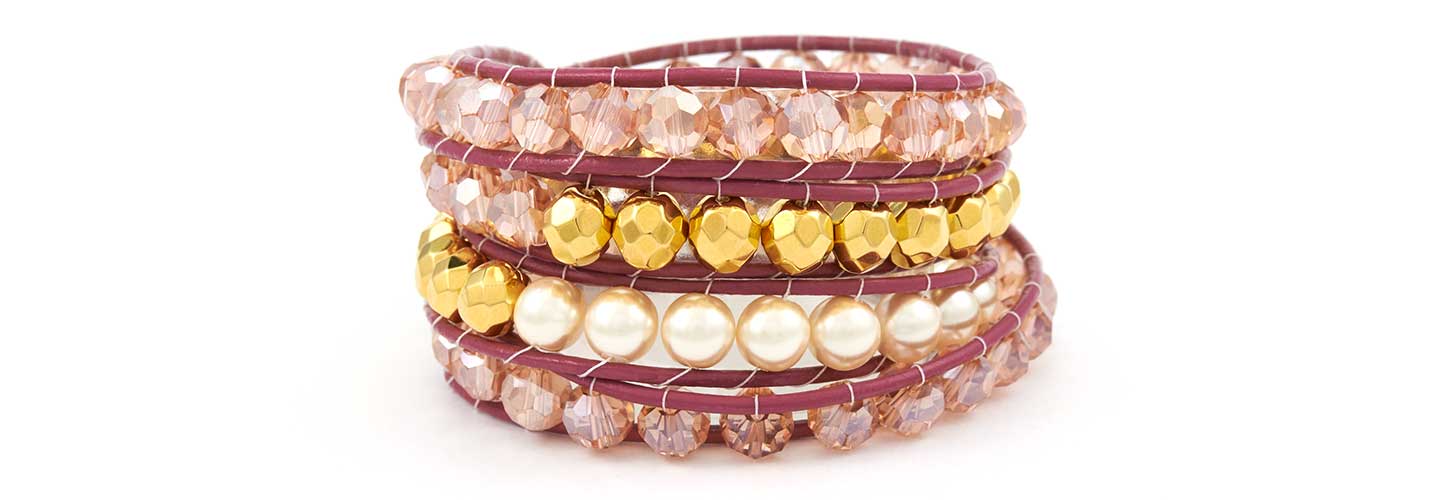
Make a bracelet with multiple combinations of beads to create a fun layered look.
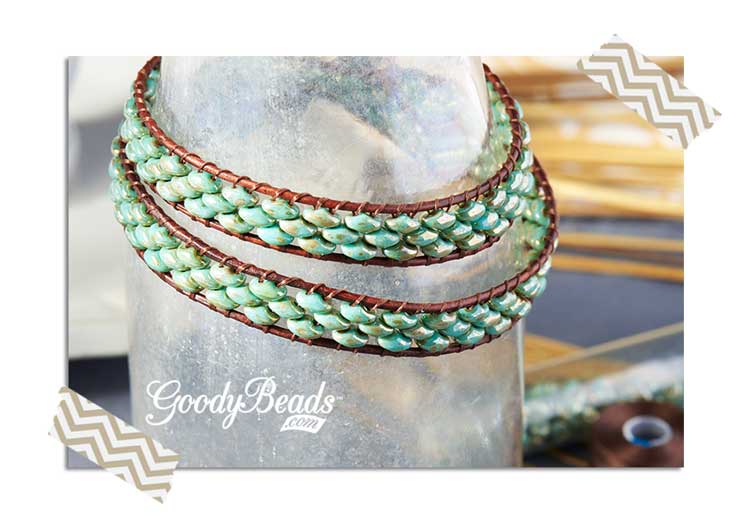
These SuperDuo beads look like tiny stone pebbles, don’t you think? Try a SuperDuo mix set for a colorful bracelet or create a zigzag pattern. What will you try?
Other Tips
How to add on additional thread: Tie thread to closest leather cord and glue with Hypo Cement or fast-drying glue. Cut off excess. Tie new thread to leather cord, glue knot and continue.
How to hold leather strands: An alternative to holding the leather strands, for stability when adding beads, is to clamp the button to a clipboard.
How to straighten leather cords: While you are stringing on beads, adjust previous beads with fingers to straighten out leather cords. Or when you have reached your desired bracelet length, lay the bracelet down and run your hand across your bracelet. This will help to smoothen and straighten your leather cords.
How to tighten threads/bead layers: If you find that your thread does not keep your bead(s) sandwiched in place or the bead sits loosely, sew up and under the cords and through the bead again. Over and down through the bead. Sewing through the bead twice on the leather cords will give your beads a tighter hold.
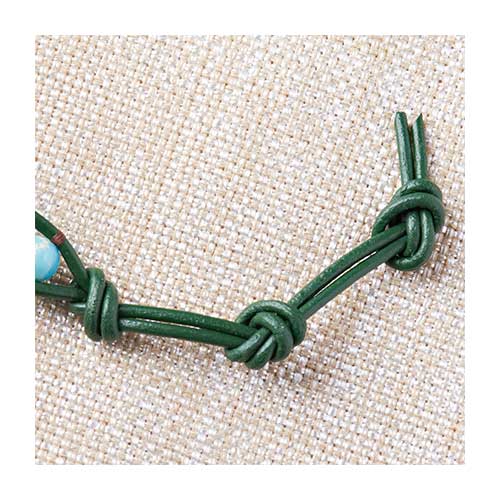
Tighten leather knots: If your leather cord knots are loosening, add a small dab of fast-drying glue or Hypo-Cement to knot(s) for tighter holds.
How to make an adjustable bracelet: Make additional knotted ends for an adjustable bracelet.
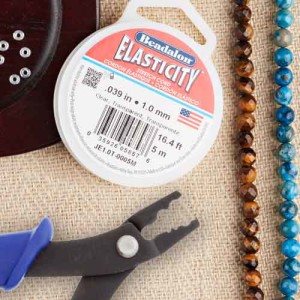
Remember when you were young and made stretchy elastic bracelets with a store-bought DIY kit of colorful beads and letters? Fast forward 10-20 years and let’s take that idea up a notch with a grown-up mentality of elastic bracelets. We love the concept of elastic bracelets because they are easy to make, inexpensive, and if you aren’t crimping the elastic, there are no tools needed.
Elastic Bracelets are simple to create, comfortable to wear and convenient: just slip them on and off! Elastic bracelets are the perfect jewelry piece for people with arthritis or those who have difficulty hooking on clasps with one hand. Layering different elastic bracelets is very on trend and bohemian looking.
We have two easy tutorials on how to finish your very own elastic bracelet.
Our first tutorial is how to tie the elastic cord of your bracelet using a surgeon’s knot.
Step 1: Gather your elastic, beads, spacers, and adhesive.
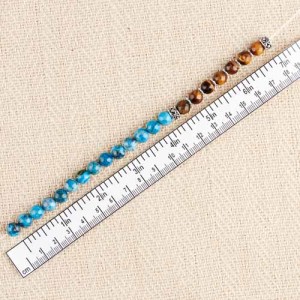
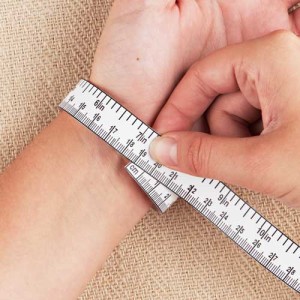
Step 2: measure your wrist size. An average size is 7″. You may add an inch if you’d like the fit of the bracelet to be a bit looser.
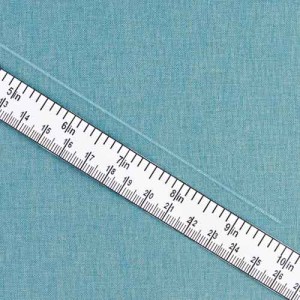
Step 3: Measure the elastic cord to your desired size, add about 4″-5″ and cut. Grab the cord at both ends and give it a tug, to loosen the elastic.
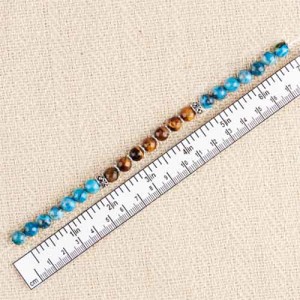
Step 4: String on the beads to the preferred length.
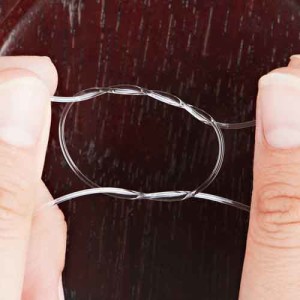
Step 5A: Make a cross knot and secure it by tying a square surgeon’s knot.
Step 5B: Illustrated look at the surgeon’s knot.
Step 6: Complete the bracelet by gluing the knot to reinforce its strength, then cut the excess cord, leaving about ¼”.
Step 7: Done!
Our second tutorial is how to crimp your elastic ends to clasps, connectors, jump rings, toggle clasp, etc. Follow the same bead sequence as above or try your own sequence without tying the ends. For this tutorial, you will need a pair of Crimping Pliers, crimp beads/tubes, and your choice of clasp.
Step 1: Gather your products.
Step 2: First, measure your wrist size. An average size is 7″.
You may add an inch if you’d like the fit of the bracelet to be a bit looser.
Step 3: Measure the elastic cord to your desired size, add about 4″-5″ and cut. Grab the cord at both ends and give it a tug, to loosen the elastic.
Step 4: String on the beads to the preferred length.
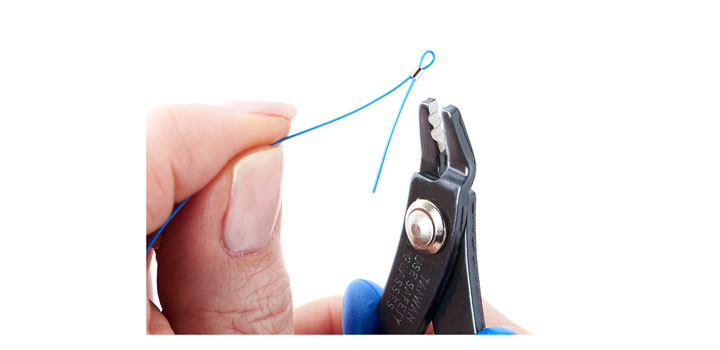
Step 5: Use a Crimping Tool. There are 2 hole crimpers. Inner hole will have a U-shape that will turn the crimp tube into a U-Shape, while the other will fold the crimp tube. First, crimp to make the U-shape.
Step 6: Then, turning the crimping tool, use the other hole crimp to fold the crimp tube, as if you are folding a book close.
Step 7: Repeat for other end of clasp. Cut off excess cord and done!
A tip when using elastic cord: loosen the elasticity by giving it a tug/stretch before starting your project. This will help in two ways. First, if you start with a piece of elastic cord, sometimes you will find it stiff. Stretching it will help make the cord more manageable to use. And secondly, because over time you will constantly stretch the elastic when slipping them on and off, it will eventually loosen the elastic. Loosening it before starting your project can avoid a looser and larger fit in the future.
Another tip when knotting or crimping your elastic, is to have a large hole bead next to it. You can conceal the knot or crimp inside the bead for a clean and professional looking finish. Or you can use crimp covers to cover the crimp or knot as if it was another bead in your elastic bracelet design.
Here are some inspirational, simple elastic bracelets that we have made using our tutorial above.
Onyx Stone Bracelet
Designed by So Vang
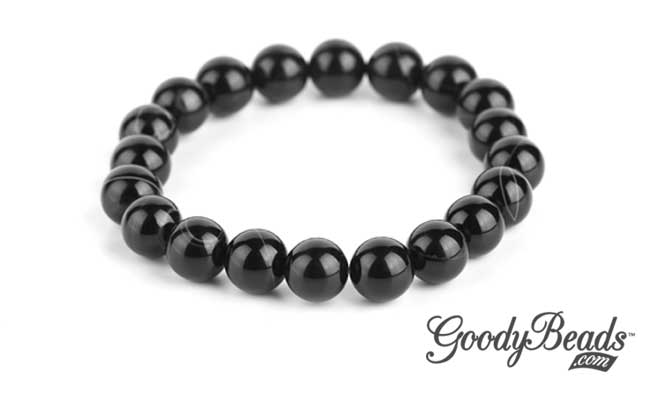
Elastic bracelets can be as simple as this Onyx Stone Bracelet. What makes this bracelet more grown up is the quality beads used for your projects. These Dakota Stone Sardonyx Gemstone Beads have a smooth, round shape with natural white lines. They are also cool to the touch so you know they are high-quality gemstones.
Wrap-Around Golden Ruby Bracelet
Designed by So Vang
You will find that elastic cords are thin yet sturdy enough for seed beads. Here, we used some size 8 seed Japanese Miyuki seed beads that have a hole size large enough for a .7mm elastic cord. Making a fun sequential design with faceted Chinese crystals, brass-plated Bali beads, Miyuki seed beads, and Czech O beads, we strung on a 28” long strand to wrap around four times a 7” wrist. You can always add more or less beads to accommodate your own wrist size.
Elastic Watch
Designed by So Vang
For this piece, we used crimp tubes/beads to connect the elastic ends to the watch face and toggle clasp. This is a fun combination of using a watch face and making it into an elastic bracelet.
Wood Tassel Bracelet
Designed by So Vang
From our Tassel blog post, comes this pair of Wood Tassel Bracelet that were made with elastic cord. Wood beads were strung in a random sequence and an added tassel for extra embellishment. We adore these two bracelets because they are lightweight and trendy with tassel addition.