
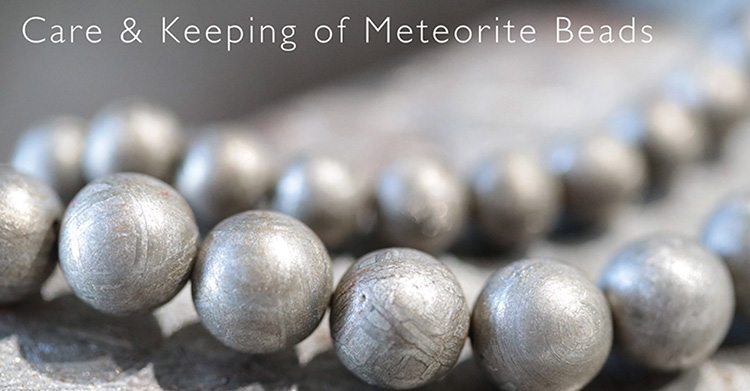


Blog Post and Information courtesy of Dakota Stones and DakotaStones.com
All gemstones are fascinating and special. They come from far-away, remote parts of the globe. These Muonionalusta Meteorite beads, however, are more special than most, and originally came from much farther away. The meteorite was first discovered in Sweden, nearly 100 miles north of the Arctic Circle, in 1906 by two children who stumbled over a metal object stuck in the ground. Later determined to be an iron meteorite, it was thought to have fallen approximately 800,000 years ago. Other, smaller pieces of the meteorite have been found in the area, spread by the impact with the earth or moved through glacial changes.
Muonionalusta Meteorite requires routine care in both specimen and jewelry form. Once you receive your pieces, it’s important to properly and regularly care for them. This article applies only to the care and keeping of Muonionalusta Meteorite in bead or other “finished” form. Different types of meteorite and meteorite specimens may require different care.
DOs
– Immediately remove from any sealed plastic packaging and put in a dry place with a controlled temperature.
– Clean your meteorite thoroughly in anhydrous (water-free) alcohol. Anhydrous alcohols include 95% ethyl alcohol which can be found at hardware or home improvement stores or 99% isopropyl alcohol found in drug stores.
– Seal it. Appropriate sealants can be found in hardware stores and include brands like WD-40 or RustGuardIt. You can also use microcrystalline wax, but this process involves prolonged exposure to high heat.
– Store in a dry, temperature controlled area.
– Store with a desiccant (silica gel packs) and recharge or change them out.
– Re-clean and re-seal as needed. The amount, type of wear, or individual wearer can all impact how frequently the stone will need to be cleaned and sealed.
– Clean and re-seal after exposure to sweat or heavy or prolonged handling.
– Remove rust with anhydrous alcohol and a steel brush.

DO NOTs
– Clean with water.
– Store long-term in anything sealed without controlling the moisture in the container.
– Submerge in water or use any product including water for cleaning.
– Wear while exercising or in environments where the piece will be in contact with a high amount of sweat and moisture.
At Your Own Risk: Seal with lacquer or acrylic agents. They can alter the appearance of the piece and be difficult to remove. They are also NOT a permanent solution or impervious to moisture.
glad i looked at this info as I have mine in plastic bag now just to find them again ha