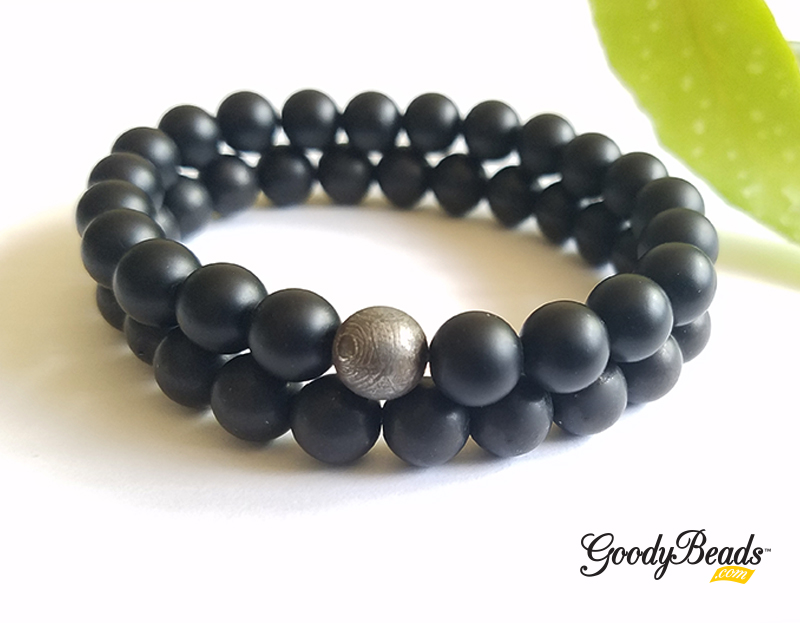
Take a break and breathe. Our DIY today helps ground yourself and bring positivity to the wearer. It consists of Shungite beads, which can “aid in pulling negative energy from the wearer in general, which may help you to keep a more positive, focused attitude” and Muonionalusta Meteorite, which promotes clarity and spiritual growth.
Plus, when you wear these stones, feel its weight. Its solid form has a tangible weight and know that you have a piece of prehistoric stones and ‘out-of-this-world’ kind of beads!
Cut a piece of elastic to 9 inches. Pull and pre-stretch your elastic.
Slide on 23 Shungite beads. (Adjust length by adding or descreasing amount of beads to fit your wrist.)
Make a surgeon’s knot. Cut Excess elastic, leaving a small stub of elastic end.
Repeat all steps for other bracelet, while substituting a Shungite bead for a Meteor bead. Make a surgeon’s knot and cut off excess elastic.
Dakota Stones® – Muonionalusta Meteorite & Care Guide
Blog Post and Information courtesy of Dakota Stones and DakotaStones.com
All gemstones are fascinating and special. They come from far-away, remote parts of the globe. These Muonionalusta Meteorite beads, however, are more special than most, and originally came from much farther away. The meteorite was first discovered in Sweden, nearly 100 miles north of the Arctic Circle, in 1906 by two children who stumbled over a metal object stuck in the ground. Later determined to be an iron meteorite, it was thought to have fallen approximately 800,000 years ago. Other, smaller pieces of the meteorite have been found in the area, spread by the impact with the earth or moved through glacial changes.
Muonionalusta Meteorite requires routine care in both specimen and jewelry form. Once you receive your pieces, it’s important to properly and regularly care for them. This article applies only to the care and keeping of Muonionalusta Meteorite in bead or other “finished” form. Different types of meteorite and meteorite specimens may require different care.
DOs
– Immediately remove from any sealed plastic packaging and put in a dry place with a controlled temperature. – Clean your meteorite thoroughly in anhydrous (water-free) alcohol. Anhydrous alcohols include 95% ethyl alcohol which can be found at hardware or home improvement stores or 99% isopropyl alcohol found in drug stores. – Seal it. Appropriate sealants can be found in hardware stores and include brands like WD-40 or RustGuardIt. You can also use microcrystalline wax, but this process involves prolonged exposure to high heat. – Store in a dry, temperature controlled area. – Store with a desiccant (silica gel packs) and recharge or change them out. – Re-clean and re-seal as needed. The amount, type of wear, or individual wearer can all impact how frequently the stone will need to be cleaned and sealed. – Clean and re-seal after exposure to sweat or heavy or prolonged handling. – Remove rust with anhydrous alcohol and a steel brush.
DO NOTs
– Clean with water. – Store long-term in anything sealed without controlling the moisture in the container. – Submerge in water or use any product including water for cleaning. – Wear while exercising or in environments where the piece will be in contact with a high amount of sweat and moisture. At Your Own Risk: Seal with lacquer or acrylic agents. They can alter the appearance of the piece and be difficult to remove. They are also NOT a permanent solution or impervious to moisture.
Dakota Stones® Carbon-Based Minerals: Shungite
Blog Post and Information courtesy of Dakota Stones and DakotaStones.com
Shungite is a modern material, the first instance of the name being coined only dating back to 1879. Then, the material could refer to any mineral with shungite inclusions– and at the time, this meant just about any stone with carbon inclusions. Over time, we’ve been able to identify what makes shungite special– which comes from the biological material it comes from. The name is derived from where it was discovered, like many other minerals — Shunga, Russia, has the largest deposits of shungite. Shungite is also almost exclusively sourced from Russia, and the mineral has been illusive in most other places in the world.
What we do know now is that shungite is almost entirely carbon. Carbon is an organic compound, and an excessively abundant element found in the earth’s crust. Carbon is also found abundantly within our bodies! We do know that because of this, shungite was likely a prehistoric plant or animal of some kind, that remained buried in the earth’s crust for thousands of years, the pressure and age transforming it into a close relative to carbon. We have yet to discover exactly what these organisms were, but they likely came from prehistoric swamps and volcanic ash.
Shungite has a non-crystalline formation, making it brittle in its raw form and very desirable for pigments in paints. Carbon-based black paint has been a new scientific and artistic achievement in the last decade. These paints create a depthless, abyssal black that absorbs all light. Looking at these extremely dark paints have created scientific opportunities, such as hiding satellites from view in the night sky. For artists and goths, this new black is an exciting opportunity, but these paints have yet to hit the mass market for regular consumption. You may need to wait a little while longer to obtain a piece of clothing that will finally let you become one with the void– but the possibility is definitely within our lifetime.
Because these shungite beads are highly carbon-based, they are very light in comparison to other black alternatives. Compared with onyx, a dense, chalcedony-based mineral, does provide a rich black. However, shungite has a unique, metallic appearance. One could compare it with graphite, which is made primarily from carbon, since it does have a lusty appearance. These beads could look sleek when paired with crystal quartz for a monotone design. Their dark color could be a nice spacer bead to provide breathing room in more colorful designs. If you’re designing something with our meteorite beads, they could make a light alternative, as meteorite is mostly iron, and tends to be somewhat heavy.
The metaphysical properties of shungite tend to be very attractive to customers who desire to protect themselves from EMFs. Carbon is an especially conductive material, so it is said that wearing these beads can help direct the flow of unwanted energies through the stones, rather than the wearer. These stones can also aid in pulling negative energy from the wearer in general, which may help you to keep a more positive, focused attitude.
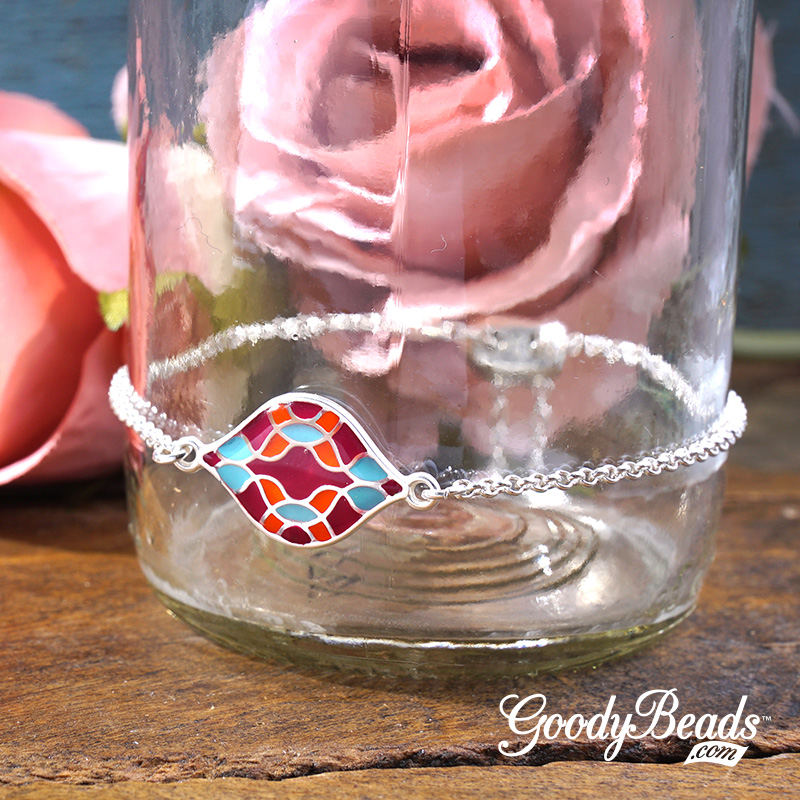
DIY Adjustable Enamel Bracelet
We have got a super simple, anyone-can-do DIY bracelet. You only need two components and know to open a jump ring.
Here is what you’ll need:
Adjustable Bracelet Sliding Clasp – Item used Z012151 (Gold Z012152)
Take two links from the bead chain link by opening and closing the loops.
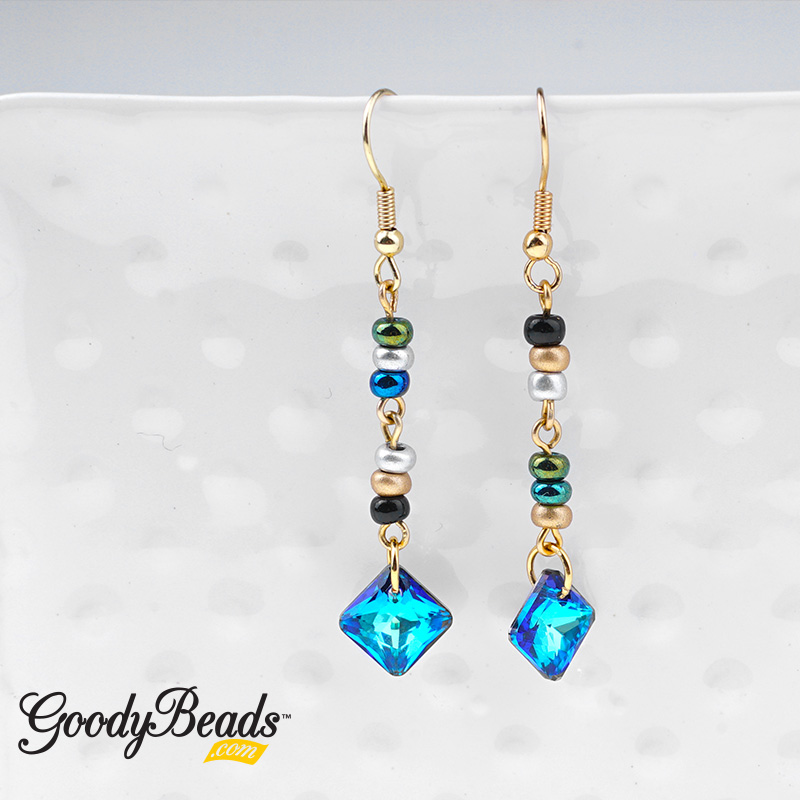
Open jump ring, slide on one end of beaded chain and through crystal pendant. Close jump ring.
Open earwire loop, slide on other beaded link end and close loop.
Repeat all steps for other earring.
Easy DIY Chain Bracelets
Today’s tutorial demonstrates how easy making simple bracelets can be. Simple and dainty with only three components; chain, jump rings and lobster clasp.
Measure chain to wrist size and then cut a link short of your measurement.
Open 4mm jump ring, slide on one end of chain end and through lobster clasp. Close jump ring.
Gently open split ring with a split ring pliers (FTTL0006) and slide split ring through other end of chain. Note: If you find that your bracelet is a bit long, take off clasp end, cut another chain link off and reattach lobster clasp. If you find that your bracelet is short, add another split ring with a 4mm jump ring to the first split ring you attached to the chain.
Repeat all steps for other bracelets.
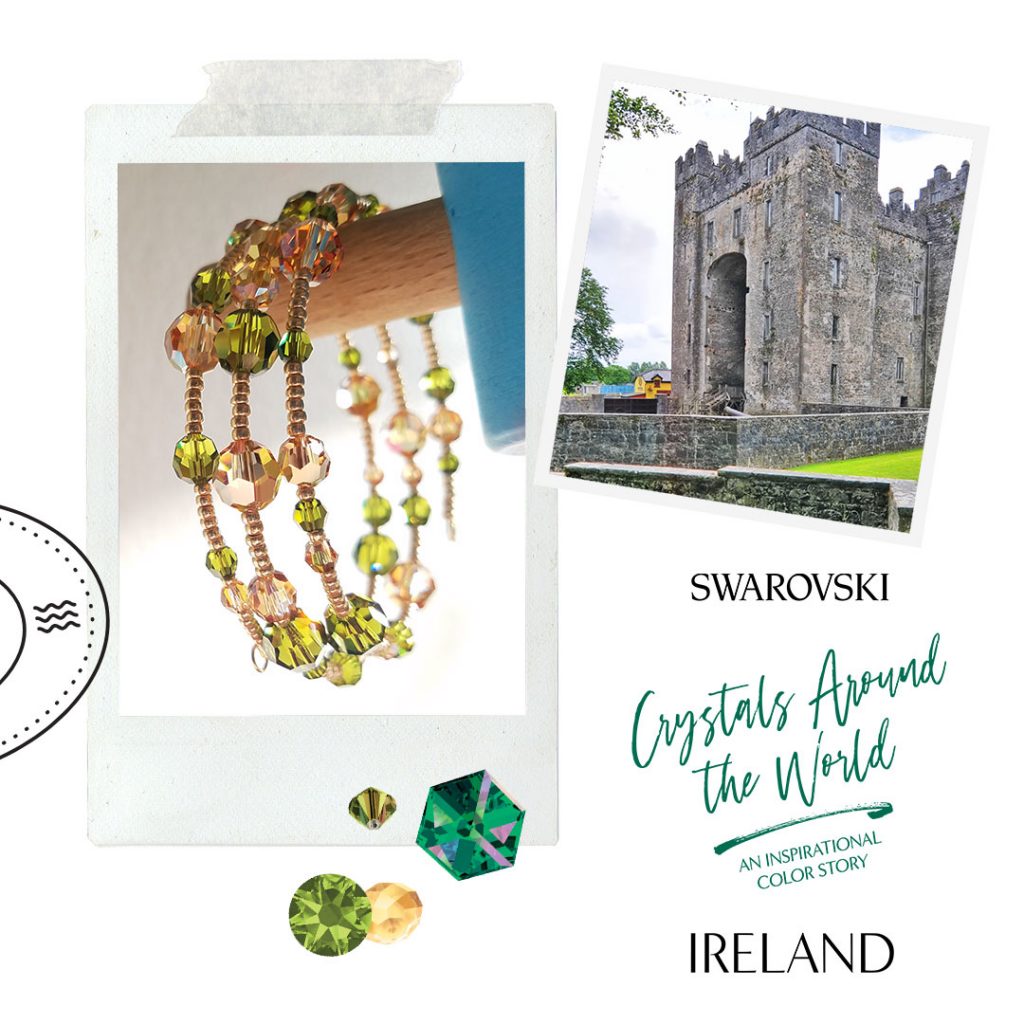
DIY Jewelry with Swarovski® Around the World: Ireland
This month’s trip is Ireland. Find out how rich and romantic this country is from its green landscapes and historical architects. Plus, venture the lush hues Swarovski suggests to inspire your Ireland trip along with a DIY jewelry project for you to try.
Ireland
As you follow the rolling hills from the Causeway Coast to the Sunny South East, your heart will be one with Ireland. Filled with centuries of ancient stories, rich culture and rugged, romantic landscapes, the “Emerald Isle,” is sure to put a sparkle in your eye. The wild unruly countryside and awe-inspiring sights lead to countless photographs in the hopes of capturing nature in its most majestic state. They say a picture is worth a thousand words, but these pieces capture all the heritage and beauty that is Ireland.
Here are some fun facts for your visit:
Ireland is named the Emerald Isles, first mentioned in William Brennan’s poem ‘When Erin first rose.”
Ireland is home to Guinness Beer
Riverdance consists of traditional Irish music and dance
The origins of Halloween is from Ireland
St. Patrick’s Day is a national Ireland holiday
Ireland has a history of world-known writers such as James Joyce, Oscar Wilde W. B. Yeats
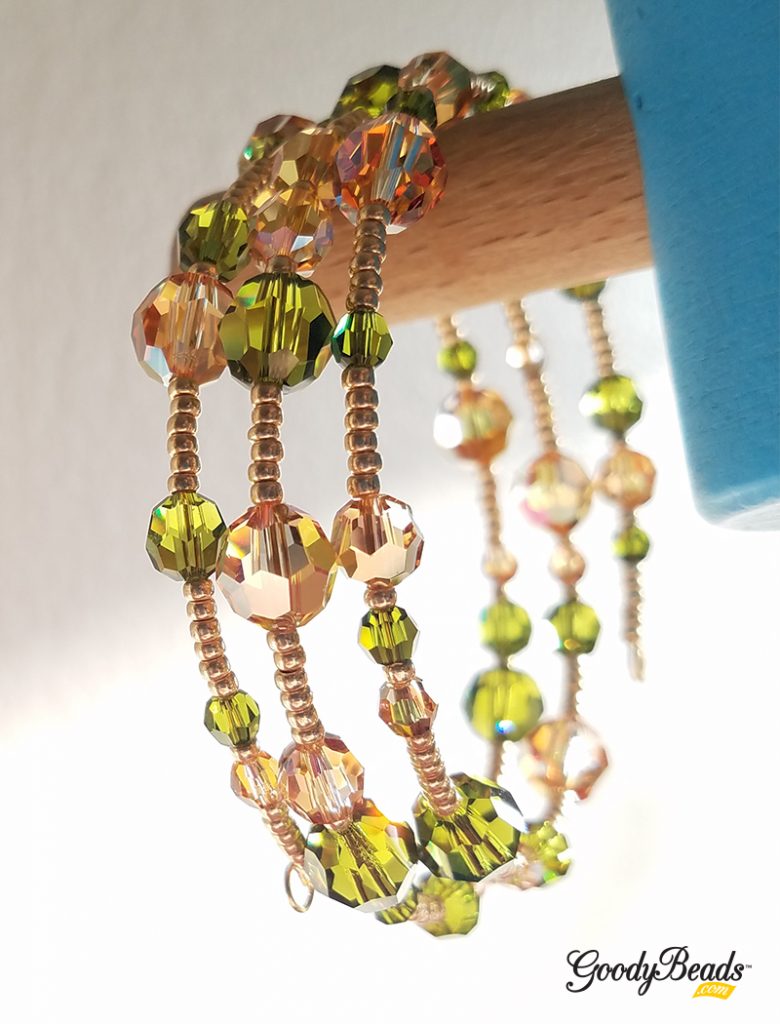
Make a simple loop to one end of your memory wire.
Slide on 6 seed beads.
Make various sequence of 1-3 crystals with a seed bead in between. And 6 seed beads in between each sequence.
DIY Criss Cross Leather Bracelet
We have a cute DIY for you today and it involves one of our favorite products, leather cord! We’re making an easy DIY leather bracelet with 2mm and 1mm leather cord to braid and make a criss cross design with flat ring links.
Your choice of button – (Item used in sample TC01245)
Directions:
Slide button onto the middle of a 30 Inch piece of 2mm leather and tie an overhand knot about ¾ of an inch from the button.
Do 7 macramé square knots starting right up against the overhand knot with 50 inches of 1mm leather cord.
Slide on a ring. In front of the ring cross the left piece of the 1mm over the 2 strands of 2mm cord and then cross the right piece over the left piece.
Take the ends of your 2 cords of 2mm leather and bend them back over the crisscrossed strands and go back thru the ring. Tighten, adjust and straighten your strands.
Repeat steps 3 and 4, 8 more times. Adjust number of rings to make bracelet larger or smaller.
After last ring do 7 macramé square knots.
With all 4 pieces of cord make an overhand knot where the macramé ends. Trim ends of the 1mm cord
Place another overhand knot using just the 2mm cords about one inch from first to create your button hole clasp.
Cut paper clip to chain to consist of 15 links (6 inches).
Open ring on star charm, slide through middle chain link and close ring.
Open jump ring, slide through link two links right from the middle link and slide on moon charm. Close jump ring.
Open jump ring, slide through link two from the left side of the middle link and slide on heart charm. Close jump ring.
Open jump ring from sliding clasp and attach to either ends of the paper clip chain. Close jump ring. Repeat on other end. NOTE: If adjustable clasp is too long, trim chain on each side 1-2 inches.
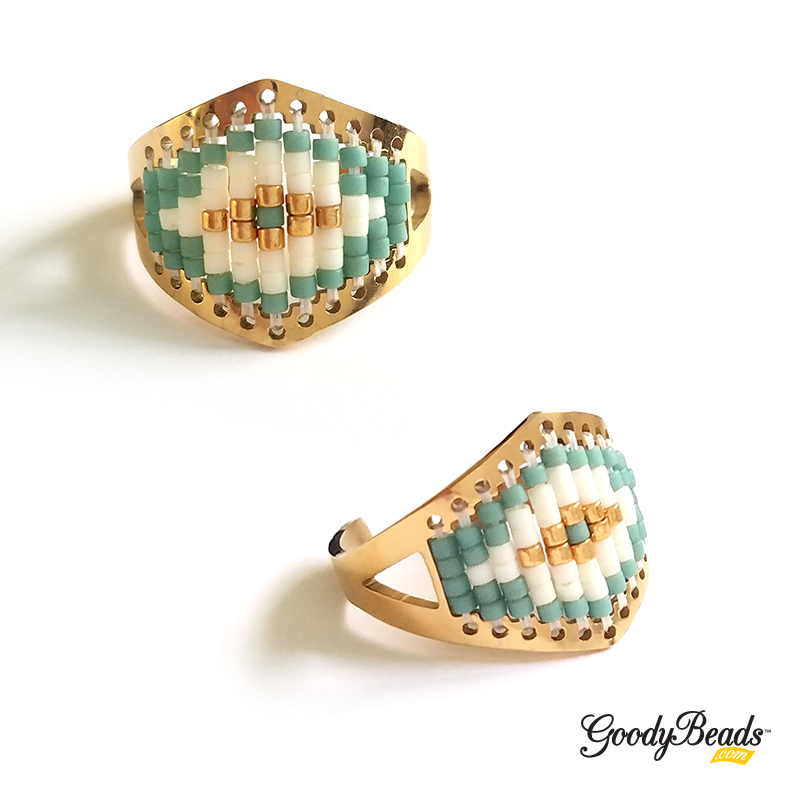
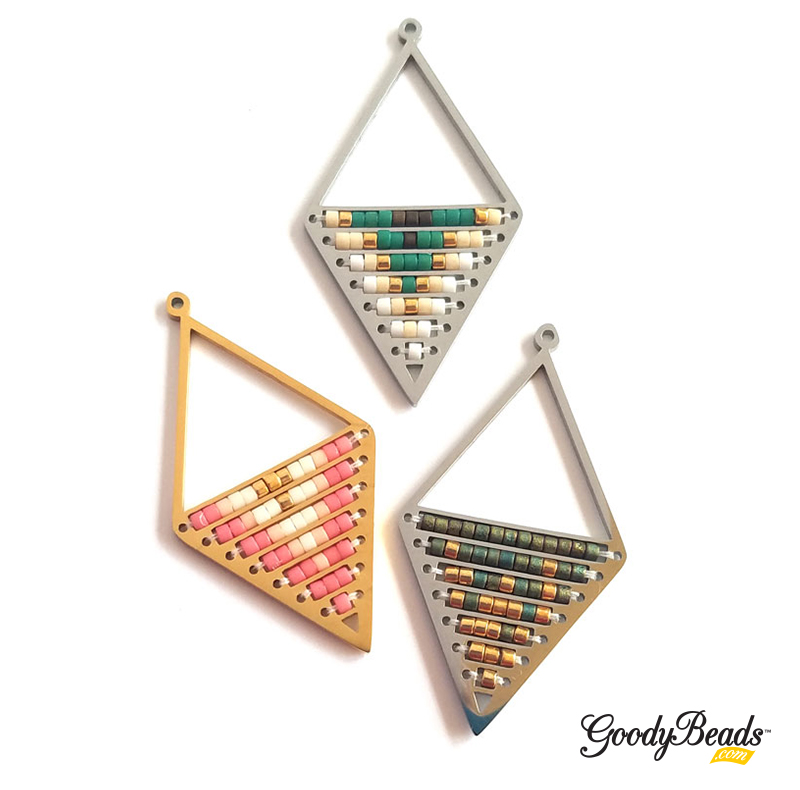
DIY Beadable Diamond Ring & Pendant with FREE Pattern Template
Some of our newer beadable products are in and we, meaning So Vang, is pretty excited to get designing! We have new Diamond Beadable Pendant and Diamond Beadable Ring, with example designs and templates so that you can get designing on your own!
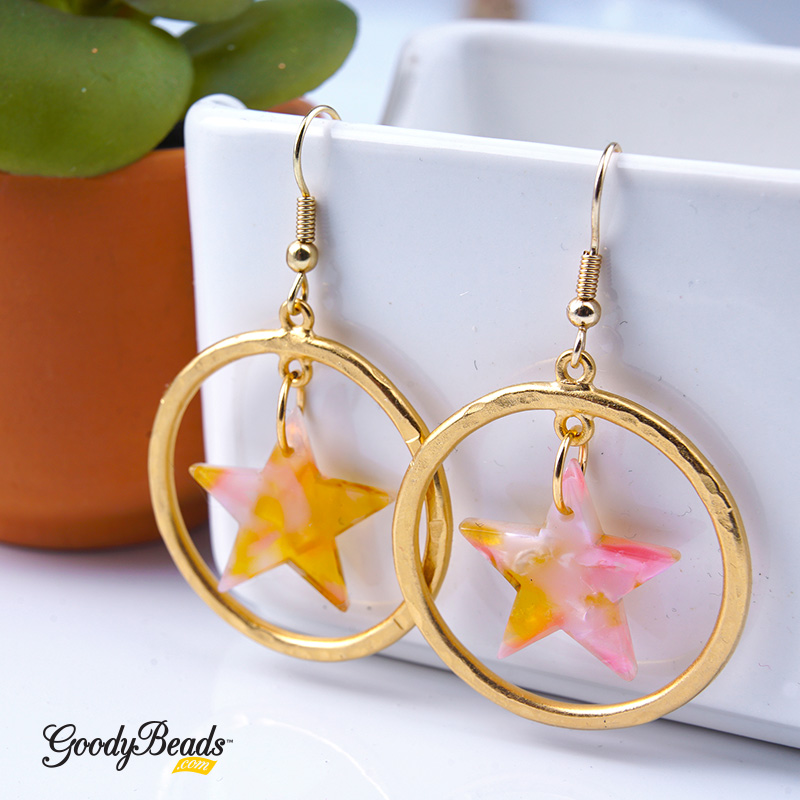
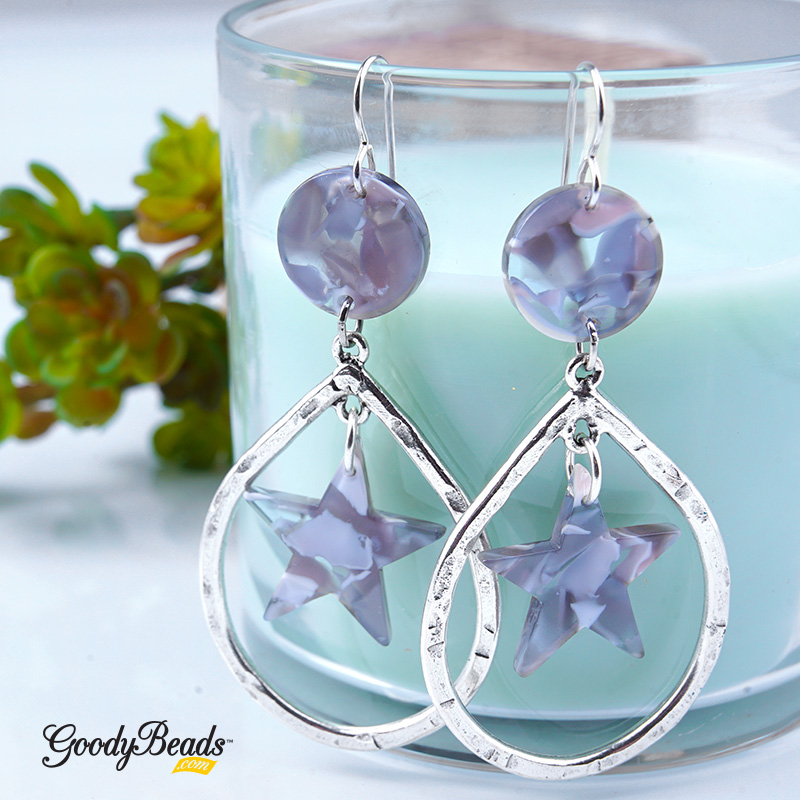
It’s getting warmer out, so why not plan for a stargazing trip? Let’s get your gear ready with some appropriate star earrings with acetate components. Here are two DIY Starry Acetate Earrings to get you started, from the Twinkle, Twinkle Little Star Trend.