DIY Spring Earrings and Necklace

Who doesn’t love warm weather and the bright colors of spring? We have two fun and easy projects for you to get you ready for spring weather!


Easy Flower Pendant
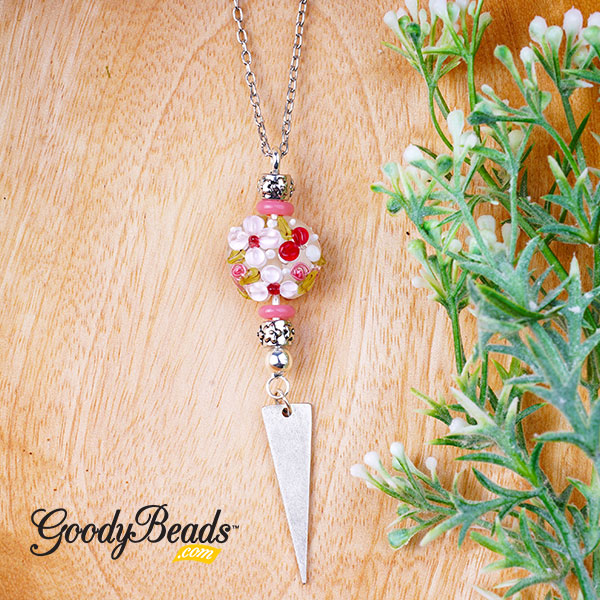
GoodyBeads Instant Pendant Flower Necklace - Free Tutorial

Instructions:

  1. With the instant pendant you easily unscrew the bottom piece and slide on the following: Silver bead, pink bead, flower bead, pink bead and silver bead.
  2. Screw back on the bottom piece.
  3. Unclasp your necklace chain and slide chain through top loop of your instant pendant. Clasp necklace chain.
  4. Open jump ring and slide on dangle and through bottom loop of the instant pendant. Close jump ring.

Items used in necklace: Z003706, A021423, Z009386 (2), Z005486, Z020510, A001529, Z001033


Pretty Pink Leather Earrings
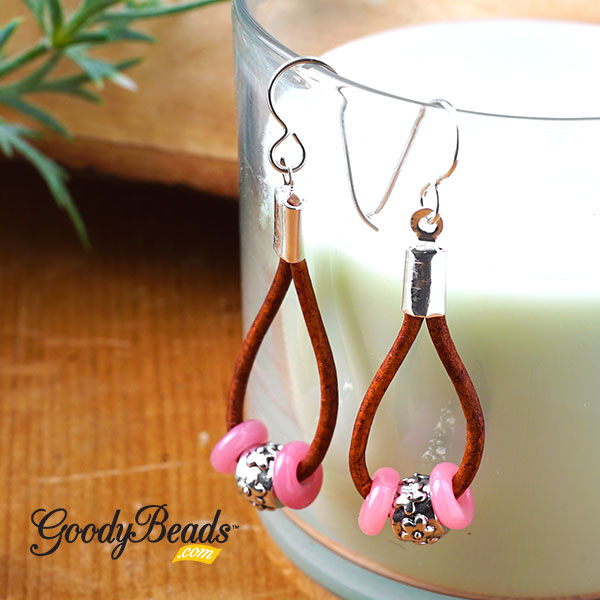
GoodyBeads Pretty Pink Leather Earrings - FREE Tutorial

Instructions:

  1. Cut 2 pieces of leather at 3 inches.
  2. Slide pink bead, silver bead and pink bead on a leather piece.
  3. Take both ends of your leather and lay on crimp end. Fold both sides of crimp ends over the leather ends.
  4. Open ear wire loop, slide on loop of crimp end and close loop.
  5. Repeat steps 2-4 for other earring.

Items used in earrings: Z007632, Z003706, TC02297, A022076, Z009386 (2)
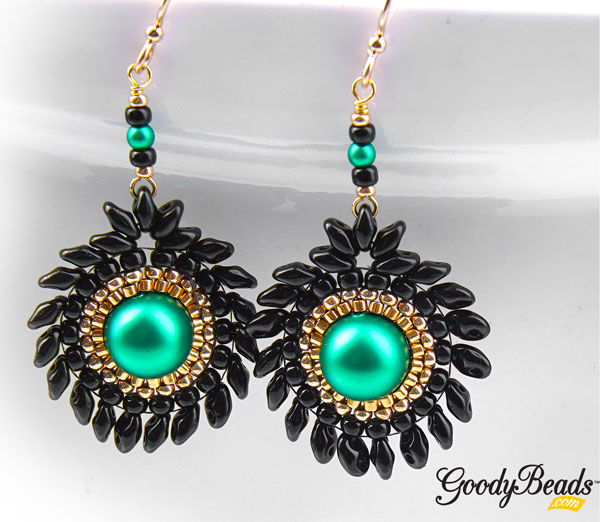


Peacock Eden Green Pearl Earrings – Pattern Tutorial

We are back with a new pattern tutorial using the new Eden Green Pearl from Swarovski®. Make yourself a pair of these earrings to your next spring outing!


Shown on our previous Facebook LIVE video, So Vang and Tory Vezina took on the challenge of designing with the new pearl from Swarovski. As the pearl itself is a vibrant hue and luster of green, So Vang had designed it with black and gold, to highlight and frame the pearl, creating what almost resembles a peacock feather. Get this FREE Pattern today here!


Items you’ll need to complete earring:


GoodyBeads Blog - Eden Green Swarovski Pearl Earrings FREE tutorial

Items used in earring above: SW02125 (2), SW02121 (2), SB00269, SB00423, SB00066, SB01406, A019596, A006588, TCZ0139, A015211


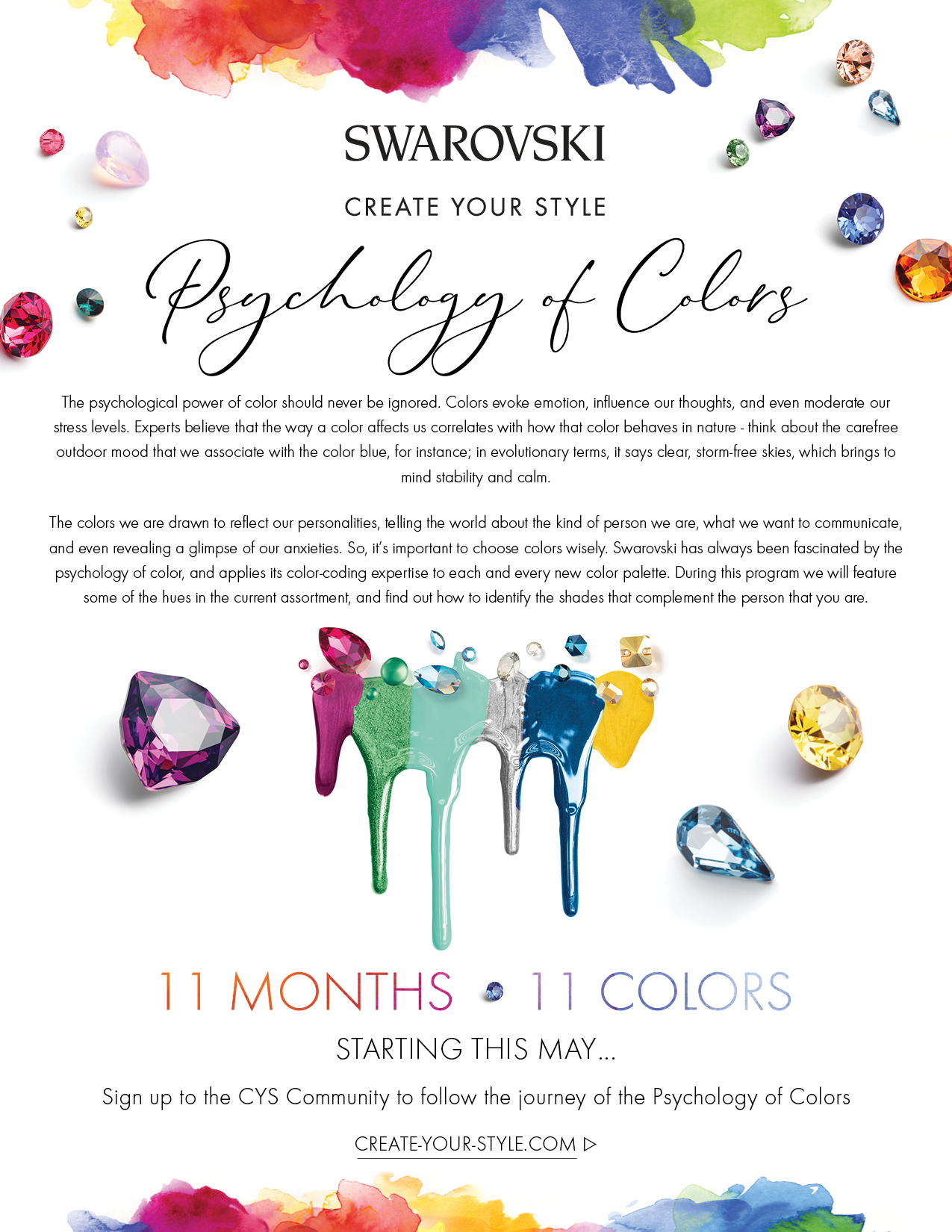
Swarovski® Psychology of Colors

Join us and Swarovski: Create Your Style for the next 11 months, as we jump into the importance of color and how it makes us feel. Each month we will feature a color, the psychology of it and even a fun project using that month’s hue.

SW_POC_Intro_Newsletter_final

Starting May 2019, follow us here on our blog and through our social media (Facebook and Instagram), as each month we will highlight a color and its importance. Shop Swarovski crystals on GoodyBeads.com.

Psychology of Colors:


Apoxie® Sculpt: Blending Colors

With this nifty Color Chart from Aves® Studio, blend the 12 classic colors of Apoxie® sculpting clay with White or Super White Apoxie and make a bunch of new colors!

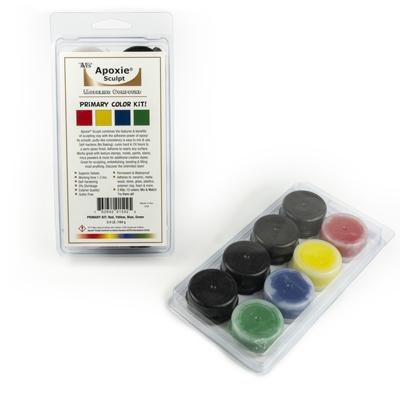
Create an unlimited possibility of colors using the original 12 colors of Apoxie® Sculpt with White or Super White Apoxie®. We have three color kits, each having 4 different classic colors:

Z018282Primary Kit (Z018282) has Red, Blue, Yellow and Green colors

Z018284

Neutral Kit (Z018284) has Black, Brown, Silver and White colors.

Z018286

And Earth Kit (Z018286) has Pink, Bronze, Orange and Natural.

WhiteSuperWhite

Mixing classic color clay with White Apoxie (A018279) or Super White Apoxie (Z018281) will create new colors!

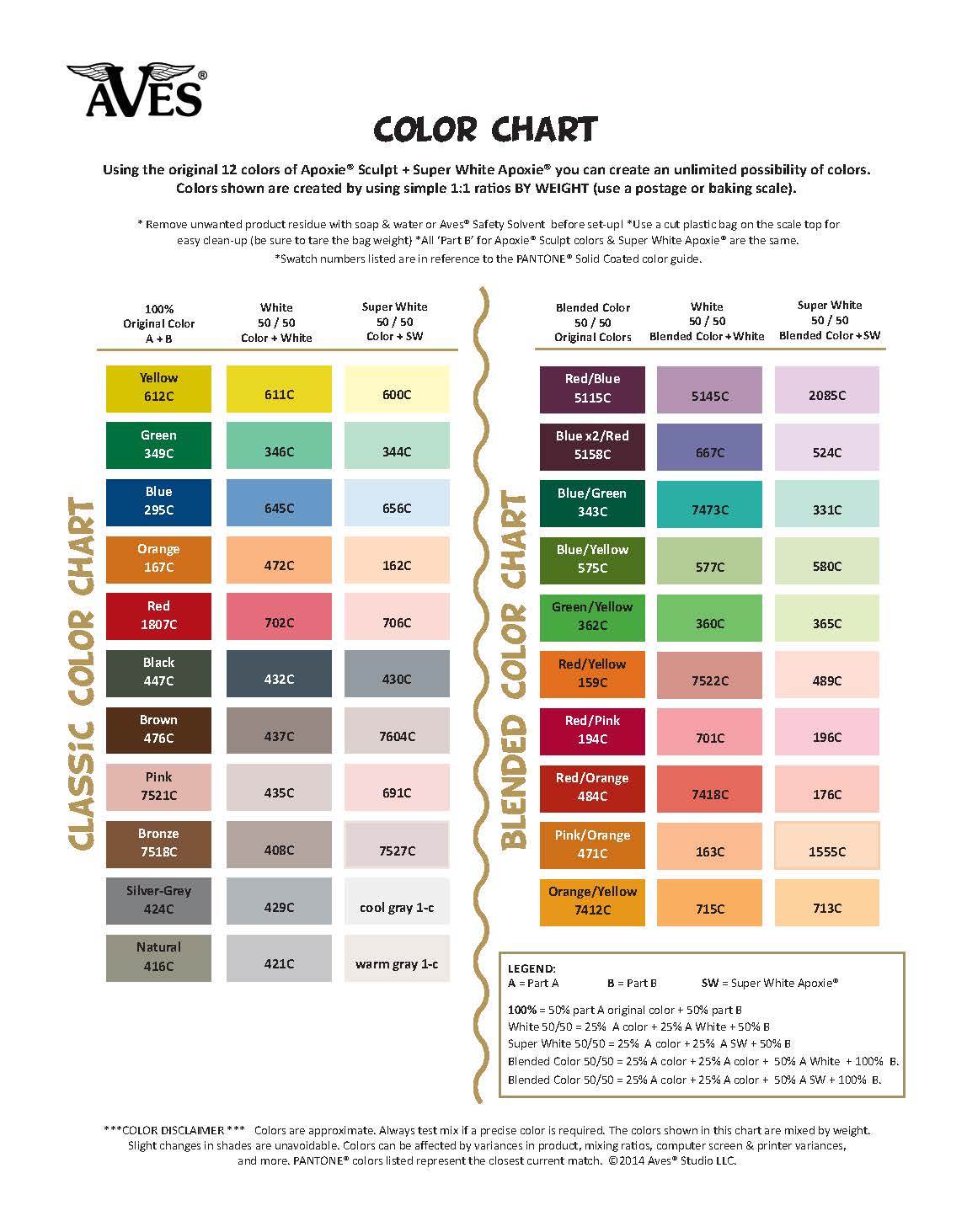
Here is color chart to using one of the 12 basic colors and mixing a 1:1 ratio with White Apoxie Sculpt or Super White Apoxie Sculpt. You will see that mixing it with Super White will give a much lighter, pastel color.

Apoxie® Sculpt Color Mixing Chart

Download PDF Color Chart Here.

The left column will be what your basic colors will look mixed 1:1 with White or Super White. The right column is a blending two color together and then the various color you can get by mixing White and Super White with blended colors.

Instructions to Mixing Classic Color with White/Super White Apoxie

  1. Blend equal amounts of Color Apoxie (Part A) to White or Super White. Make sure to blend it thoroughly.
  2. Take an equal amount of Part B, matching the size to what you’ve mixed in Step 1.
  3. Blend thoroughly.


Instructions to Mixing Blended Color with White/Super White Apoxie

  1. Blend equal amounts of two colors. Make sure to blend it thoroughly.
  2. Take equal amount of White or Super White, matching size to what you’ve mixed in Step 1. Blend thoroughly.
  3. Take equal amount of Part b, matching the size to what you’ve mixed in Step 2. Blend thoroughly.


Once you’ve got these colors mixed, you are ready to sculpt your projects!

Make sure to check out Apoxie Sculpt 101 to learn about Apoxie basics and quick tips and tricks.


Apoxie® Sculpt 101

Check out this easy and simple tutorial with a video tutorial on Apoxie Sculpting clay.


We were lucky to have Erin Gerlach from Aves® Studio to join us in the GoodyBeads mezzanine to show one of our newest products: Apoxie Sculpt. ‘Apoxie® Sculpt combines the features and benefits of sculpting clay with the adhesive power of epoxy! Its smooth, putty-like consistency is easy to mix & use.’ (Aves) It self hardens and will adhere to any surface such as wood, glass, metal, plastic, etc.


Apoxie Colors

GoodyBeads sells all the colors that Aves has to offer in different sizes amounts. Being new to Apoxie Sculpt, we would recommend the small .10 lb product to test out the product. It’s a good amount to get started and even make a few beads!


Mixing Apoxie Sculpt and Curing

Apoxie Sculpt comes in a two part package. Part A will consist the color of your clay, while Part B is the hardener. When both parts are mixed at a 1:1 ratio, it will begin it’s curing and hardening process. You will have a limited amount of time to mold, adhere and design before it begins to thicken and harden, making it harder to shape and mold. Here is a step-by-step tutorial from Aves Studio on mixing Apoxie Sculpt:

  1. Wear disposable gloves to measure equal parts of A & B. Always retrieve parts A & B with different tools.
  2. Mix & knead together for 2 minutes until thoroughly combined and a uniform color is achieved. Note: incomplete mixing will give poor results. *Allow mixed product to rest up to 5 minutes for better handling.
  3. Apoxie® Sculpt is ready to use; working time is 1- 3 hours. Shape as desired. Smooth or texture with a wet finger, brush, Q-tip or sculpting tool. Self-hardens (NO BAKING); 24 hour full cure. 24 hr. full cure required for hard finishing purposes such as sanding, carving, drilling, machining, etc., without chipping, cracking or flaking.

One of the best surface to lay your designs on is a silicone mat. If you don’t have a silicone mat, a plastic sheet like a Ziplock bag will work. You want a pliable surface so that you can peal your piece off easily.

Make sure to check out Apoxie Color Chart blog post to see the many colors you can create.


Video: Product Feature and Tutorial


Additional Tools (Optional)

  • To keep your work surface clean, use a silicone mat.
  • Rubber fondant roller to roll out your clay
  • Cookie cutters
  • Silicone Molds
  • Mica Powder or Powder Pigments: add color to the surface of your clay.

Tips and Tricks

  • Wear gloves for easy cleanup.
  • If you are not wearing gloves, make sure to fully wash and clean hands and nails thoroughly.
  • Use a dab of Vaseline or olive oil, or a light spray of coconut oil on your gloved hands before mixing the clay. This will help to easier to mix the clay, lessen the stickiness on your fingers.
  • For cleanups, use Aves® Safety Solvent to clean up pigment/product residue. Put a drop of solvent on a paper towel for cleanups or on a Qtip for small detailed cleanups. Use solvent to also smooth clay or remove fingerprints.
  • Properly close unused containers to extend shelf life.
  • Put mixed Apoxie in the freezer to halt curing time.
  • Spray molds or rollers with coconut oil for easy


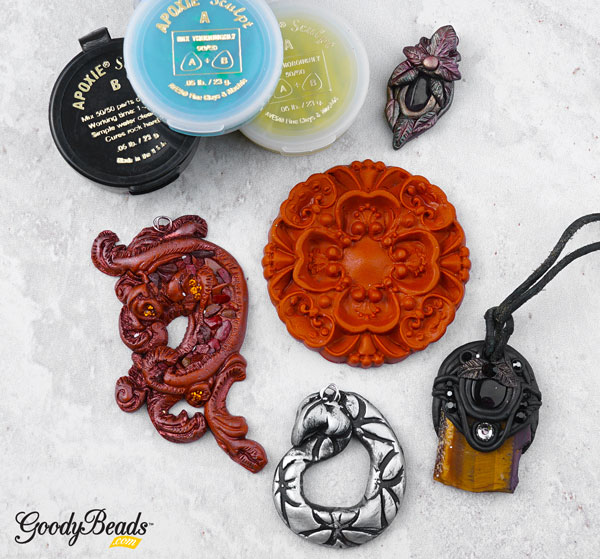
Apoxie Sculpt Samples

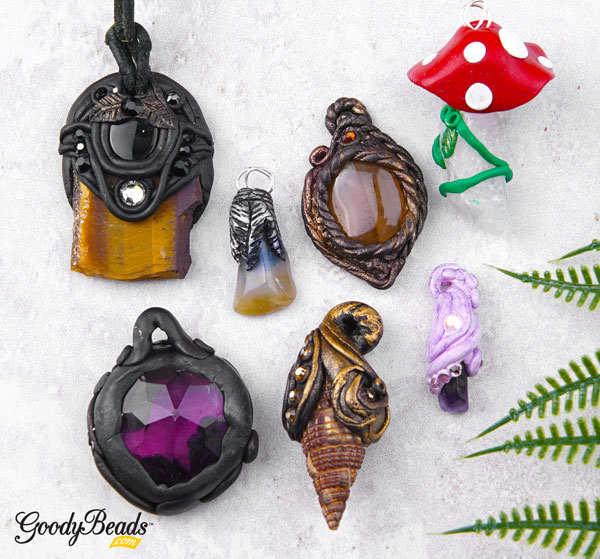
Here are samples of what you can make! Designs by Erin Gerlach.

GoodyBeads Blog - Apoxie Sculpt from Aves Studio Video Tutorial

GoodyBeads Blog - Apoxie Sculpt from Aves Studio Video Tutorial

GoodyBeads Blog - Apoxie Sculpt from Aves Studio Video Tutorial

How will you design with Apoxie Sculpt? We would love to see your creations!


Extra Heavy Duty Memory Wire Hoop Earrings – Tutorial

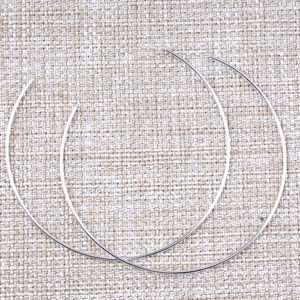
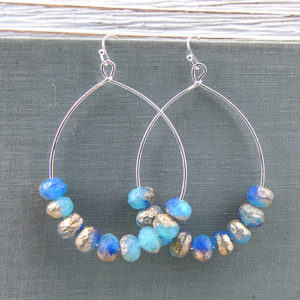
Make memory wire hoop earrings using the new Beadalon® Extra Heavy Duty Memory Wire. They’re so easy, you’ll find yourself making them over and over!

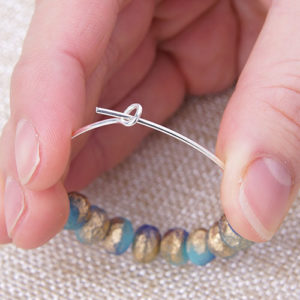
Hoop earrings have been a big fashion trend since the 1970’s. This pictorial shows how easy it is to make your own pair of hoop earrings with Czech beads. This tutorial was also demonstrated by So Vang during the 2018 Bead and Button show. Check out the video tutorial and blog. And when Candie Cooper was here, Tory and Candie did a Facebook LIVE video on this same tutorial. (Tutorial starts at 30 minutes)

What you’ll need:

Tools you’ll need:

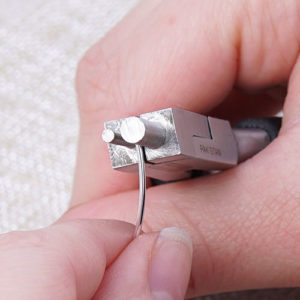
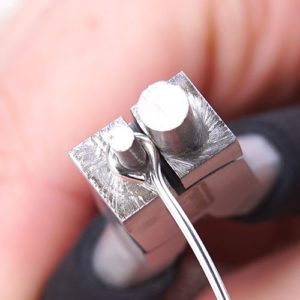
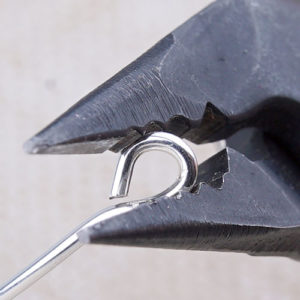
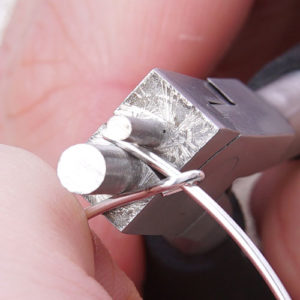
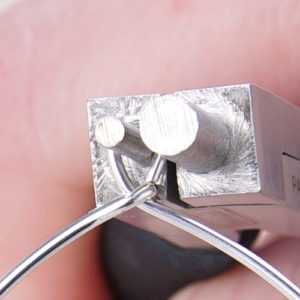
Tips to note when making your hoops. The Extra Heavy Duty Memory Wire is thick, so make sure you grasp tightly with the Finishing Pliers when you make your loops. AND make your loops at the base of your pliers. You’ll get a firmer grasp on the wire and lessen the tension and strain you will put on your Finishing Pliers. You can also make these hoops using other memory wires, it will work just the same.

Tutorial

Items used in earrings tutorial: WR00131, Z012031 & Z011359


Vendor Video: Artistic Wire® Adjustable Necklace Jig

Make adjustable necklaces with Artistic Wire Findings Forms Necklace Jig. Accompanied with a video tutorial from Beadalon® and Artistic Wire.


Make trendy choker necklaces with the Adjustable Necklace Jig, using Artistic Wire and basic tools.

Here are things you’ll need to make adjustable wire necklaces:


Tools:


Video Tutorial


  1. Straighten wire with Wire Straighter Tool.
  2. Bend the wire around the top of the jig.
  3. Bend one end of the wire around the top peg.
  4. Wrap the wire around the jig one and a half times. (Turn the jig to wrap the wire.)
  5. Wrap the wire around the other jig  peg.
  6. Remove the wire from the jig.
  7. Cut the tail end with flush cutters, leaving a small hook. Cut the other end leaving a small hook.
  8. Optional: If you’d like the necklace to be smaller, just a small cylinder to adjust wire.
  9. Use the Memory Wire Finishing Pliers to turn a loop. (Use larger peg of plier.)
  10. Use Bent Chain Nose Pliers to bend wire 90° down.
  11. Repeat Steps 9 and 10 to other wire end.
  12. Use pliers to open loop. Latch the loop onto the necklace and close it.
  13. Repeat step 12 to other end.


Finish off your necklace with a dangle charm. Or if you want to add beads to your necklace, string on beads before completing step 11.


Beadalon Knot-a-Bead Tool – Video Tutorial

Candie Cooper is back with Tory to show how easy it is to use the Beadalon Knot-A-Bead tool. Check out today’s video tutorial to knotting your own creating today!


GoodyBeads Blog | Beadalon Knot-a-Bead Tool Video Tutorial

Making knotted jewelry is a delicate skill that can be done with chain nose pliers, awl or tweezers. But with the Beadalon Knot-A-Bead tool, you can easily make quick and easy knots. Here is what you’ll need to get you started:


Video Tutorial


Instructions

  1. Make a loop with the end of your beading thread and make an over hand knot. This will create a loop for your necklace later.
  2. Slide on the silk cord, all the beads you’ll be knotting. It is helpful to layout your design ahead of time to determine your sequence.
  3. Slide a bead down to your first knot. Take thread and wrap it over the metal dowel/awl, and then under.
  4. Tie a knot and pull the silk cord upwards to cinch the knot together.
  5. Take the beaded portion and push it to the back to get it out of the way.
  6. Slide knot over to the right and hook thread under the yoke and pulling downwards and across to tighten the knot. There is a button lever on the left side. Push that to release the knot and thread.
  7. Slide over next bead and repeat.
  8. Once you’ve made a knot in between all your beads, repeat step 1 to other end of knotted beads to create a loop.
  9. Cut excess thread.
  10. Open a jump ring, slide through beading thread loop and a 6″-8″ chain end. Close jump ring.
  11. Repeat steps 10 to other end of knotted beads.
  12. Add your clasp to one end of your chain piece with a jump ring and your necklace is complete!


Along with the Beadalon Knot-a-Bead, you will get instructions on how to easily use the tool:

Beadalon Knot a Bead Tool Instructions


DIY Diffuser Necklace with Lava Beads – Tutorial

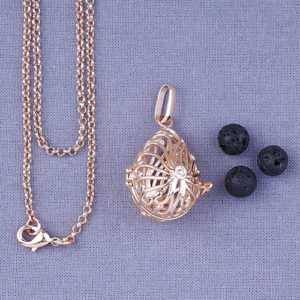
Check out this easy tutorial for making your own DIY Diffuser Necklace with lava beads.


Essential oils are a rapid trend that is used in aromatherapy. “Scientists think they work by sending chemical messages to parts of the brain that affect mood and emotion. Although these scents alone won’t take all your stress away, the aroma may help you relax.” (WebMD) Check out our previous post on some popular essential oil scents and its healing properties. 


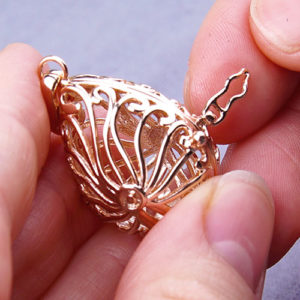
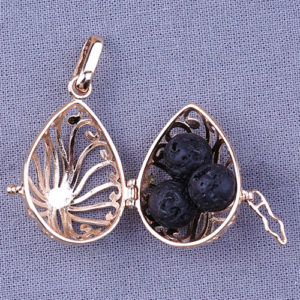
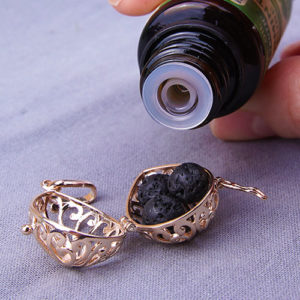
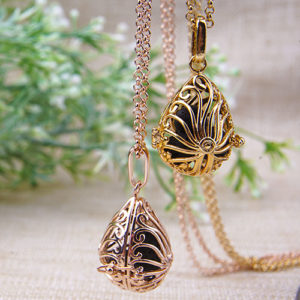
Many users of essential oils just rub it on their skin, but you could design DIY jewelry with lava beads for a fashionable statement. Learn how to make your own diffuser pendant necklace with scented lava beads in this easy DIY tutorial.

GoodyBeads Blog - DIY Lava Diffuser Necklace


What you’ll need for DIY Diffuser Necklace:


Tutorial


Using Spacer Beads with New Czech Lentil Coins

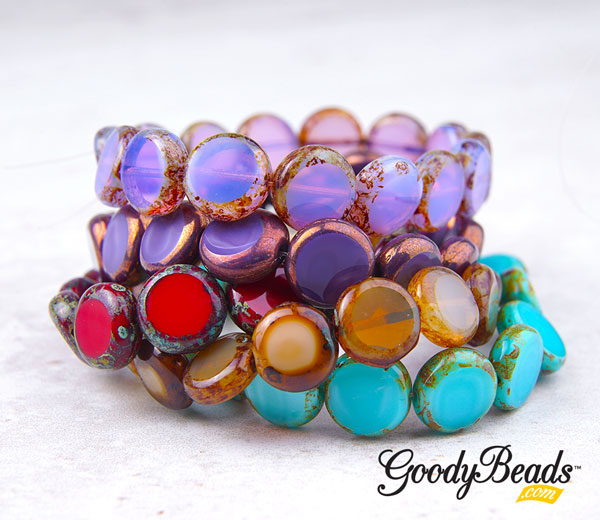
Accentuate your designs and beads with spacer beads. Here was different ways to use spacer beads with our NEW Czech Lentil Coin beads.

One of the many reasons to using spacer beads in a design, is to create space between larger or more pronoun beads, hence the name. What it also does when space is added, is to alleviate the rubbing between beads. For larger beads or crystals, sometime when you lay then next to each other, the movement you put into wearing your design will eventually shift and rub. This may in time, chip or crack the beads. So adding spacer beads or smaller beads will lessen the rubbing.

Plus, it adds a pop of color, style and overall look with spacers. For this example, we’ll use these New Czech Lentil Coins.

GoodyBeads NEW Czech Lentil Coin Beads

Lentil Coin Beads: Z014437, A014438, Z014441, Z014443, Z014445, Z014447

Using Spacer Beads

here are different beads and spacers you can add in between beads to bring out a fun look to your beaded strand!

SpacerBead_01

A. Use a bead as a spacer bead. Here, we used Czech Fire-polish beads. (A011558)
B. Size 8/0 Miyuki Seed Beads (SB00106)
C. Czech O-Beads (SB01893)
D. Daisy Bali Spacer Beads (Silver A003563/Gold A004238/Copper A004216)
E. Bali Spacer Bead (Silver A003564/Gold A004239/Copper A004218)
F. Triangle Brass Bead (Silver A022195/Brass A022196/Gold A022197/ Copper A022198)
G. 6mm Wavy Disc Beads (Silver Z018411/ Gold Z018412)

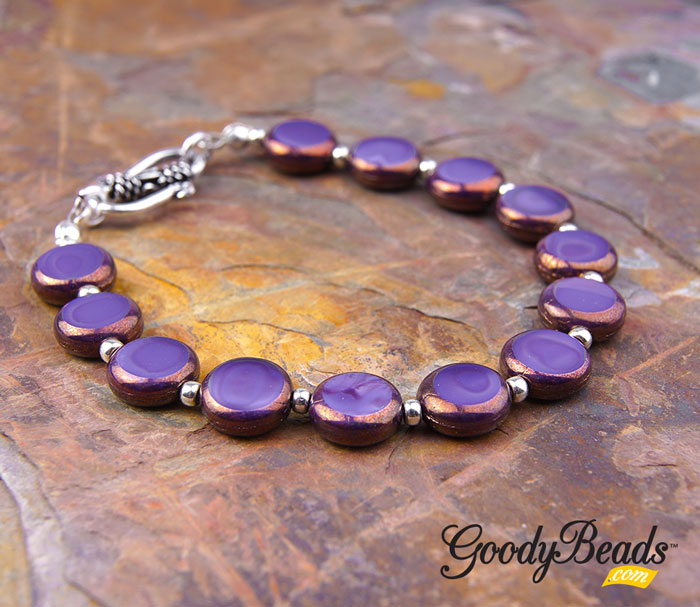
Purple Passion Bracelet

Here’s a bracelet we made using spacer beads and Czech Lentil coin beads. It makes for a flat design, simple yet fun. Can you imagine the possibilities!

GoodyBeads Blog | Czech Lentil Coins

Items used in bracelet: FTBW0001, Z014445, SB00106, (2) TC01897, Z010740, A003577

Bracelet Instructions:

  1. Cut a 9 inch piece of Soft Flex Wire.
  2. Slide on a crimp tube and make a flat crimp to one end of flex wire.
  3. Slide on clamshell and cover crimped tube. (Check out Clamshell Blog for more information)
  4. Slide on a seed bead and Lentil Coin. Repeat sequence until you’ve used a full strand of Lentil Coins. You can add more until you’ve reached your desired length.
  5. Add a seed bead to the end. Slide on a clamshell and another crimp tube.
  6. Make a flat crimp to the crimp tube, close inside the clamshell.
  7. Cut excess flex wire and close clamshell over the crimped tube.
  8. Slide jump ring from Hook Clasp through loop of clamshell. Close clamshell loop.
  9. Repeat step 8 to other end.
    (Optional: you can substitute hook clasp for a clasp of your choice.)