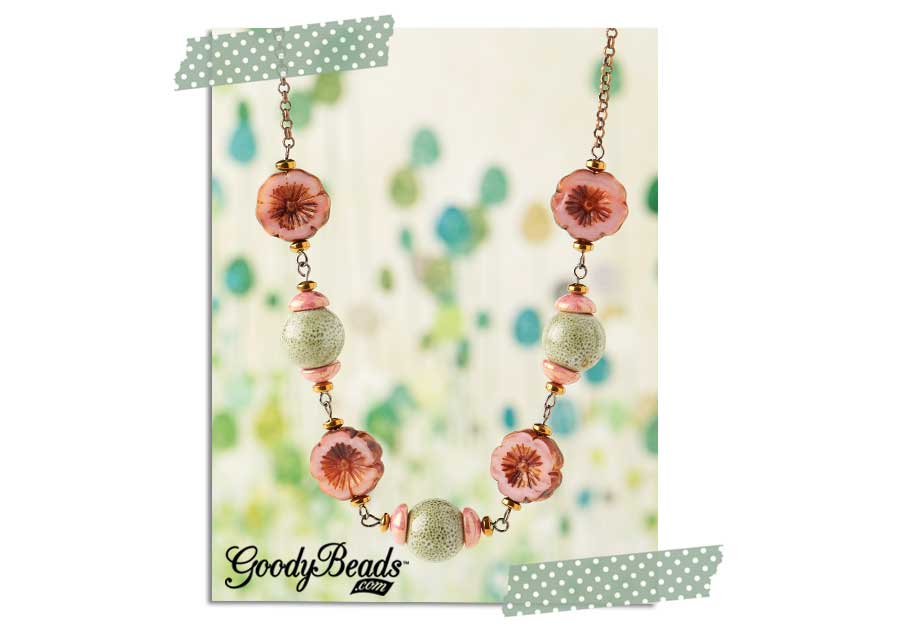
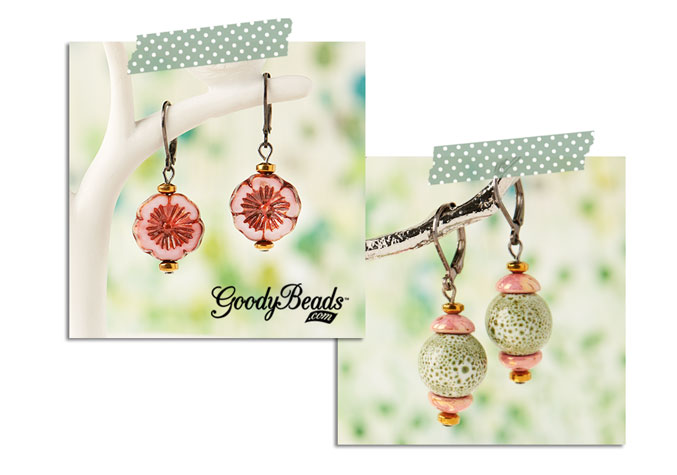
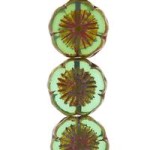
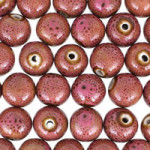
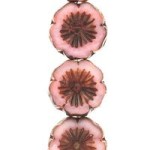
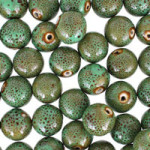
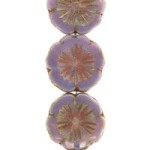
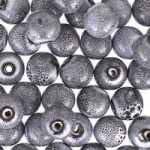
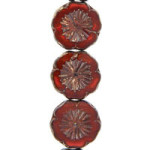
We are celebrating spring with some fresh Czech hibiscus flower beads. Flowers always come to mind when thinking about spring. And tropical hibiscus flowers are the perfect reminder that warmer months are ahead. We have some easy and inspiring spring jewelry projects that use beautiful Czech hibiscus flower glass beads and porcelain beads.
Porcelain and Czech Elastic Bracelet
Designed by So Vang
Here is a perfect bracelet to add to your spring outfits. Made with Czech hibiscus flower beads, Czech leaves, and pink porcelain beads, it is strung on elastic for an easy and wearable bracelet. For additional ideas, check out out our previous blog on elastic bracelets.
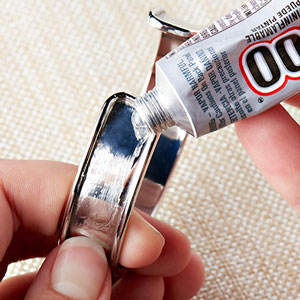
Rainy season is upon us. And what better way to a rainy day then making some leather cuffs. We have an easy leather cuff tutorial that will make you want to put away your rain boots and umbrellas, and “veg out” making these easy leather cuffs.
Instead of using a strand of 10mm flat leather, you can make two layers with two 5mm flat leather. We paired the mustard flat leather with this graphic neon splatter-printed leather on a gold-plated, glue-in-cuff.
(7) CH00047 – 5mm Mustard/Black Flat Leather (out of stock)
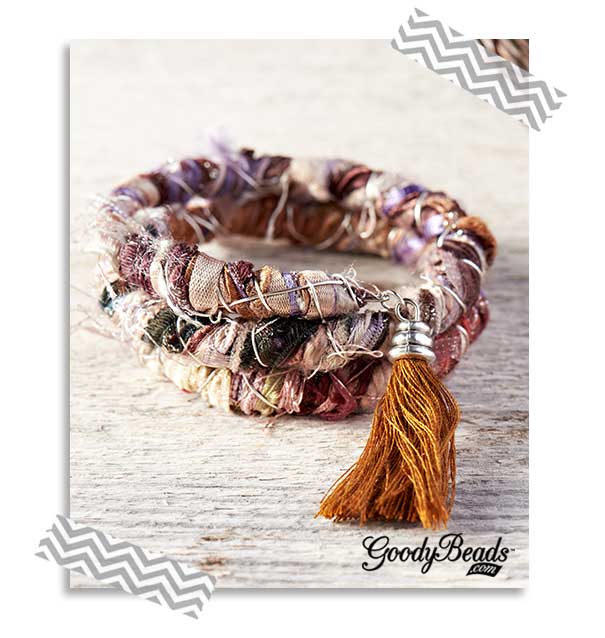
To encompass the trend of boho, we have pulled our wonderful stock of silk ribbon and ribbon mixes to show you how to use silk ribbon in jewelry. We will show you how to make an easy wrap memory wire bracelet with silk ribbon and silk ribbon tassel earrings.
Boho Silk Memory Wire Bracelet
Designed by So Vang
This bracelet is perfect to wear on a beautiful summer day. We used the Hand Dyed Ribbon Mix, which has eight 2 yards of ribbon, yarn and fabric mix. When wrapped around memory wire, the colors and various fibers has a boho charm. You can finish off your bracelet with a tassel attached at the memory wire loop end or add charms scattered around the bracelet with jump rings. This memory wire ribbon wrap bracelet is easy to make and to pair with your everyday outfit. Just follow our easy instructions or DOWNLOAD our pdf tutorial.
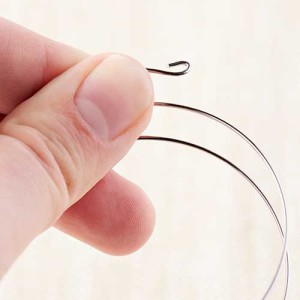
Step 1: Cut memory wire for 2-3 wraps. Make a simple loop at each end.
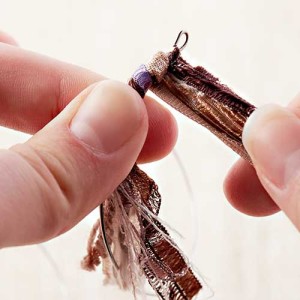
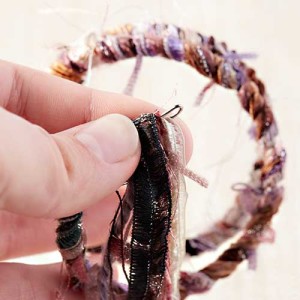
Step 2: Gather your strands of ribbon mix to one end. Hold about 3 inches of the ribbon strands with the memory wire. Start wrapping your ribbon around a few times close to the loop.
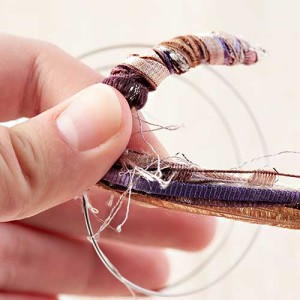
Step 3: Tightly coil the ribbon strands around the memory wire. Make sure to keep your strands flat and not twisted when coiling the strands. Take your time.
Step 4: At the end, glue to secure. Wrap strands back towards the beginning of memory wire to create a fuller looking bracelet. Once you run out of strands, dab a small amount of glue to hold ends down.
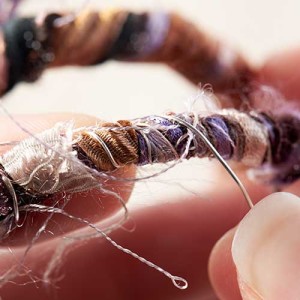
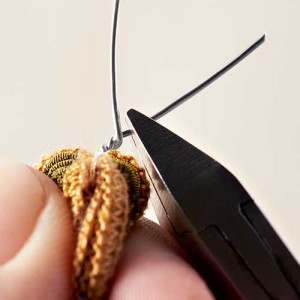
Step 5: Wrap 26 Gauge wire around ribbon strands to secure the strands.
Step 6: Embellish with charms, bead dangles, tassel, or wear as is. Your boho fiber bracelet is complete!
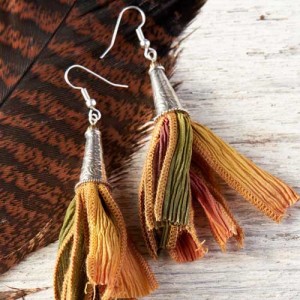
Use silk ribbon to make a trendy pair of tassel earrings. Make some fun pair of earrings like what we have made here. OR create a longer tassel to use in a statement necklace.
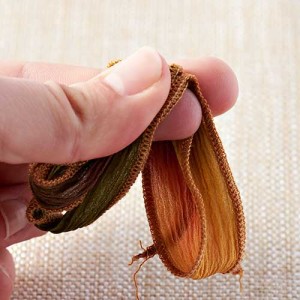
Step 1: Cut silk ribbon in half. Take one half and fold in half. Fold again and again for a total of three half folds.
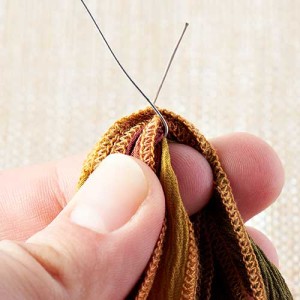
Step 2: Cut 4 inches of 22 Gauge wire. Insert under last ribbon fold a third of the way and cross the wire strands.
Step 3: Twist the two wire strands. Cut excess length of the shorter wire strand.
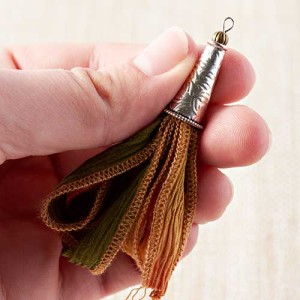
Step 4: Insert cone on wire and use flat nose pliers to pull tassel snuggly inside cone.
Step 5: Add a small bead and make a simple loop.
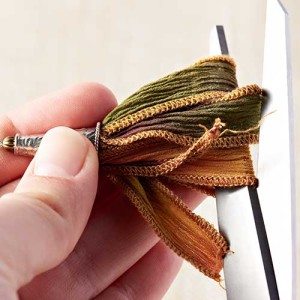
Step 6: Cut the ribbon loops.
Step 7: Attach ear wire and repeat for the other tassel earring.
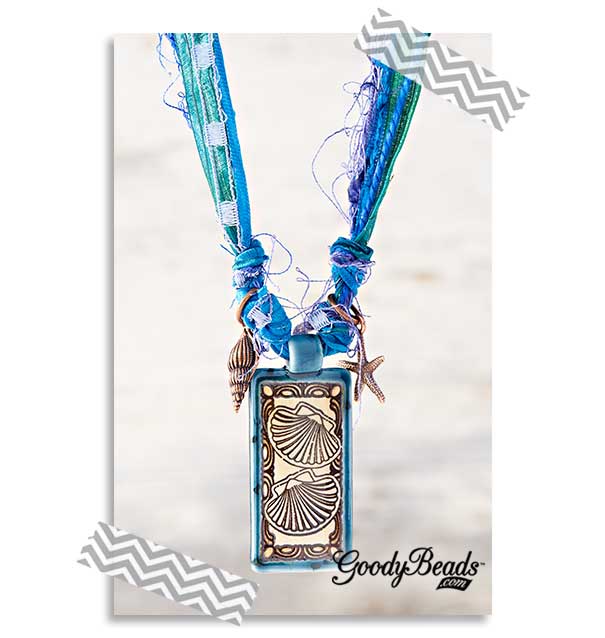
Center a porcelain pendant to these mix ribbon and make knots on both sides. Then make another knot next to those knots and added seashell and starfish charms with copper jump rings in between each knots. This necklace takes you to the beach without even being there!
How to Use Ricks Bead Loom, PLUS Two Ways to Clasp Loom Bracelets
From traditional Native American Indian-loomed wampum belts to popular and modern Julie Rofman wrap bracelets, bead looming has transcended through changes in time, culture and fashion. A bead loom can help you make elaborate, beautiful necklaces to simplistic bracelets.
If you are new to using the bead loom or have been wanting to use a bead loom, believe us when we say that using the Ricks Bead Loom is super easy and simple. Here are some tips and tricks to using Ricks Bead Loom, as well as some inspirational loom bracelets to get you started. We also provide two different ways to clasp loom bracelets.
Ricks Bead Loom
When you purchase a Ricks Bead Loom, you receive the bead loom and its components, as well as a detailed, visual instructions of how to set up and use the bead loom. You can also check out Ricks video tutorial on his webpage on how to use his bead loom.
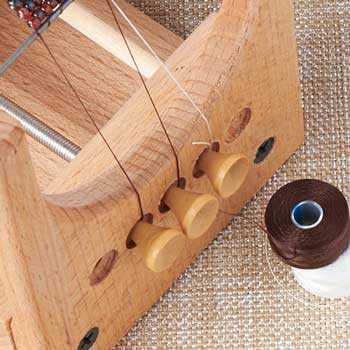
The basic method of bead looming is weaving a thread back and forth through rows of seed beads that are sandwiched in between vertical strands or “warp strands”. The difference between a traditional bead loom and Ricks Bead Loom is the amount of warp strands you are using. A traditional loom will have multiple warp strands going up and down along the loom, while a Ricks Bead Loom will have only one strand that wraps back and forth, up and around between the two rods. This continuous wrapping of the strands between rods will leave you with two threads at the end.
Like the instructions you will receive, first you insert your metals rods. These rods are where your vertical warp strands will lay. Adjust the wood piece/tailstock to your preferred bracelet length and start making your warp strands. The amount of warps you have is according to the amount of beads you have in a row, PLUS ONE. If you see the image below, you will see that we have eight seed beads per row and thus we need nine warp strands.
Next, lay your card separator in between the warp strands. It is optional to use the card separator. You can use the warp separator card that comes with the kit. Here, we cut a ½ inch piece of cardstock paper to get us started.
Hook your thread end to your peg and insert it into one of the holes in the front.
You are ready to start your rows. The basic motion of weaving each row is by weaving behind the warp strands with your beads and string. You will then weave back into the same row of beads, but when you feed your needle through, you are gracing the top side of the warp strands.
TIP: When bringing your needle back, use the backside of your needle. Using the backside of the needle will give you a smoother glide through the beads. Be careful not to prick yourself with the sharp end when using this method. Makes you wish you had a thimble on hand, huh? I did.
The first two rows will be tricky but after that you get those two on, it will be easier.
After your two rows are done, slide off the separator and pull your two rows down so it is flushed against the metal rod. Twist the peg that attaches to your thread to keep loose thread tight.
And you are ready to continue with your rows until you’ve reached the end.
TIP: When bringing your needle back through the row of beads, press up on the beads so that they protrude upward. Then, when you sew back through the beads, you will go over the vertical warp strands.
When you have finished your piece, unhook your threads from the pegs and sew the end threads through the rows and knot them. Cut excess thread. Slide your loomed piece off the metal bars and spread out your bead rows evenly outwards towards the ends to hide the loops of the warp strands. Then you are ready to add your clasp ends. Here are two types of loomed bracelets with instructions for adding a Miyuki Tube Finding and sewing on a bead loop to add your clasp.
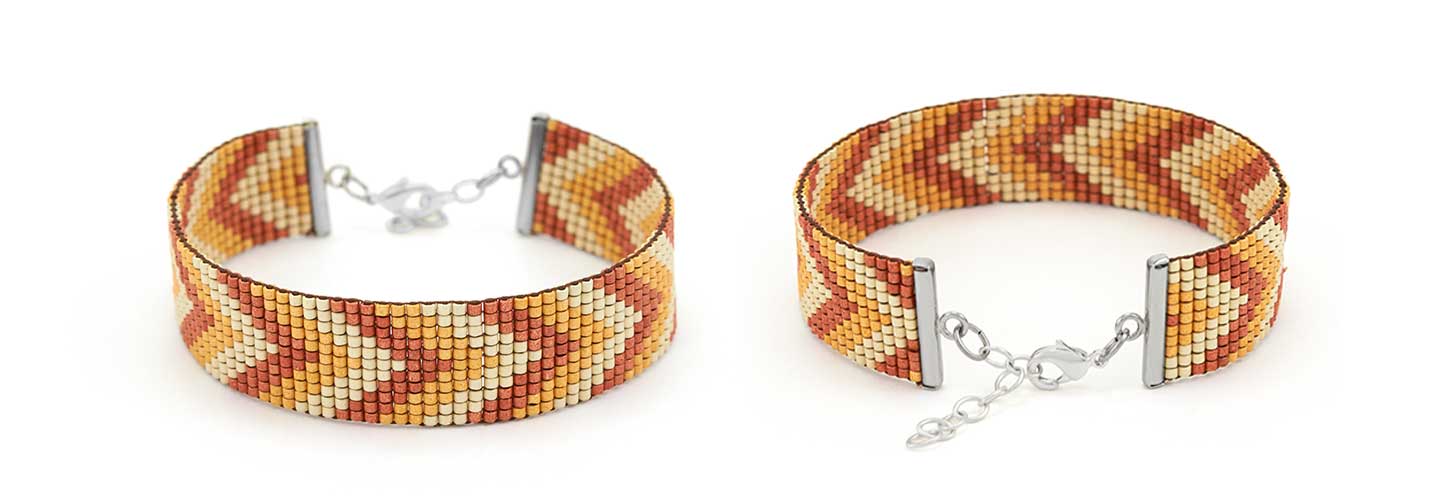
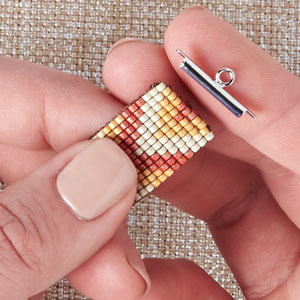
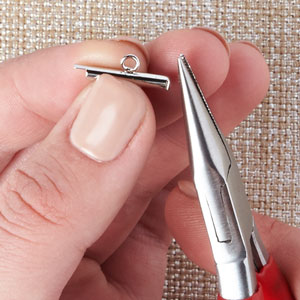
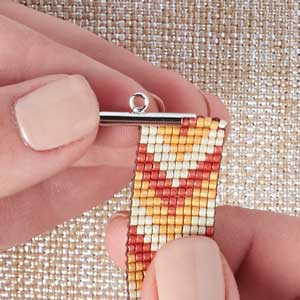
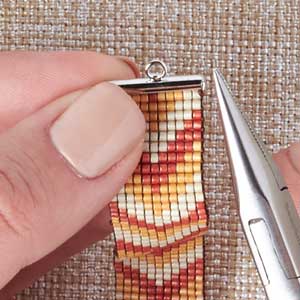
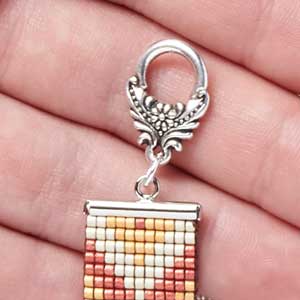
For this bracelet, we used Miyuki Tube Findings, which are used particularly with Miyuki Delica Size 11 seed beads. GoodyBeads has four available sizes at 15mm, 20mm, 35mm, and 60mm, which will accommodate a certain amount of seed bead per row.
You can make a design like our Delica seed bead bracelet or you can use a Miyuki seed bead mix like our bracelet here. For our clasp for this bracelet, we made a loop using seed beads.
Step 1: Tie your thread end and insert your needle halfway through your row of beads.
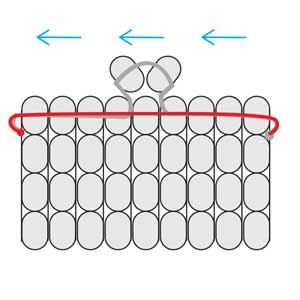
Step 2: Add two seed beads. Skip one seed bead in your row and insert needle through the rest of your row. Make a knot.
3. After you make a knot, go back through the seed beads you threaded through. Make a knot on the other end.
Step 4: Then, feed your needle and run through your entire bead row and make a knot. Cut excess thread.
Step 5: Your end result.
Step 6: Insert jump ring in the loop you’ve made and add your choice of clasp. You are finished.